
With inflation exploding in the post-covid era, the sad truth is that the people who will be hardest hit are those who can least afford it. Given that inflation (~7%) far outpaces the promised returns from traditionally “safe” store of values such as bank deposits (0.06%) or fixed income instruments (~1%), what used to be prudent financial practices are now actually detrimental to the average person. Based on this difference of ~6% per annum, the purchasing power of those that diligently save up using these methods would have dropped by half ~12 years down the road. This means that those that save are worse off as they don’t get to enjoy the fruits of their labor today and their savings lose more value over time.
This is less an article about demeaning the current financial system in favor of decentralized cryptocurrencies, which I have plenty of reasons to. Instead, what I hope to do is to tweak your perspective of risk/returns when it comes to your investments and diversification of your portfolio. Given crypto volatility, losing double digit percentages of your investment in a day is definitely scary (now not exclusive to cryptos)but when compared to the guaranteed lost of value if you keep your money in the bank, these risks are not as crazy as they seem.
What the crypto decentralized finance (DeFi) space offers is a relatively sustainable way to combat inflation and actually grow your purchasing value over time through using various passive income strategies. Without going into too much details, these higher returns are made possible due to the high transaction volumes in the crypto space as well as the disintermediary nature of interacting with smart contracts where there are no pesky agents involved. Critically, these returns can be achieved without having to trade, meaning you generally do not have to time the market as returns are not coming directly from capital gain.
With that out of the way, below are some crypto passive income strategies to put you back on the path to financial independence. These are ranked based on my subjective view of what is most accessible vs the risk and returns that the average person would be getting.
1. Interest bearing accounts/deposits on centralized exchanges (~4-12% APY)
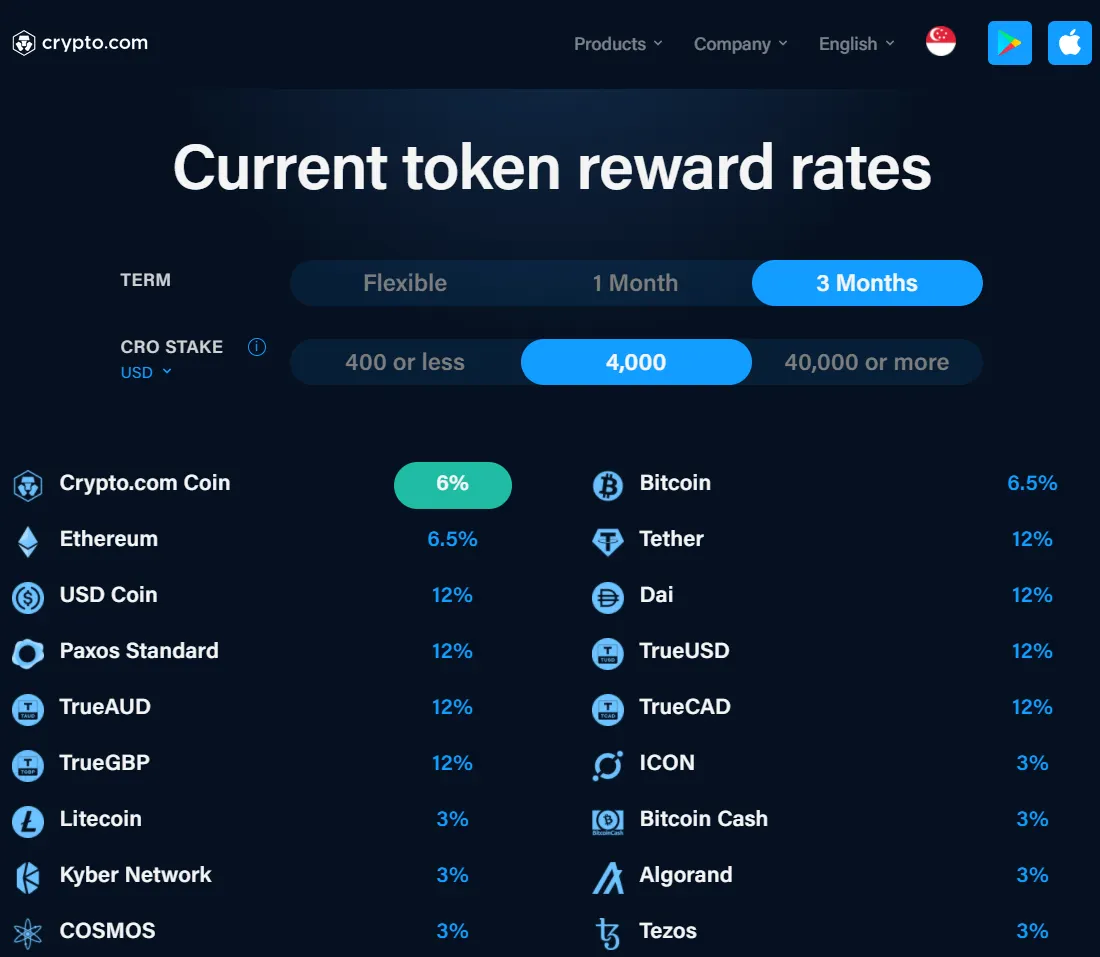
If you’ve owned any crypto before, you have probably first obtained it via trading on these centralized exchanges (i.e. Binance, Huobi, Crypto.com). This ease of accessibility is why it is top on this list. Most major exchanges have a flexible or fixed deposit, where users can earn an interest by lending out or keeping their cryptos to/on these exchanges. This interest is paid out in the asset that is provided to the exchange (i.e. if you loan BTC, interest is paid in BTC)
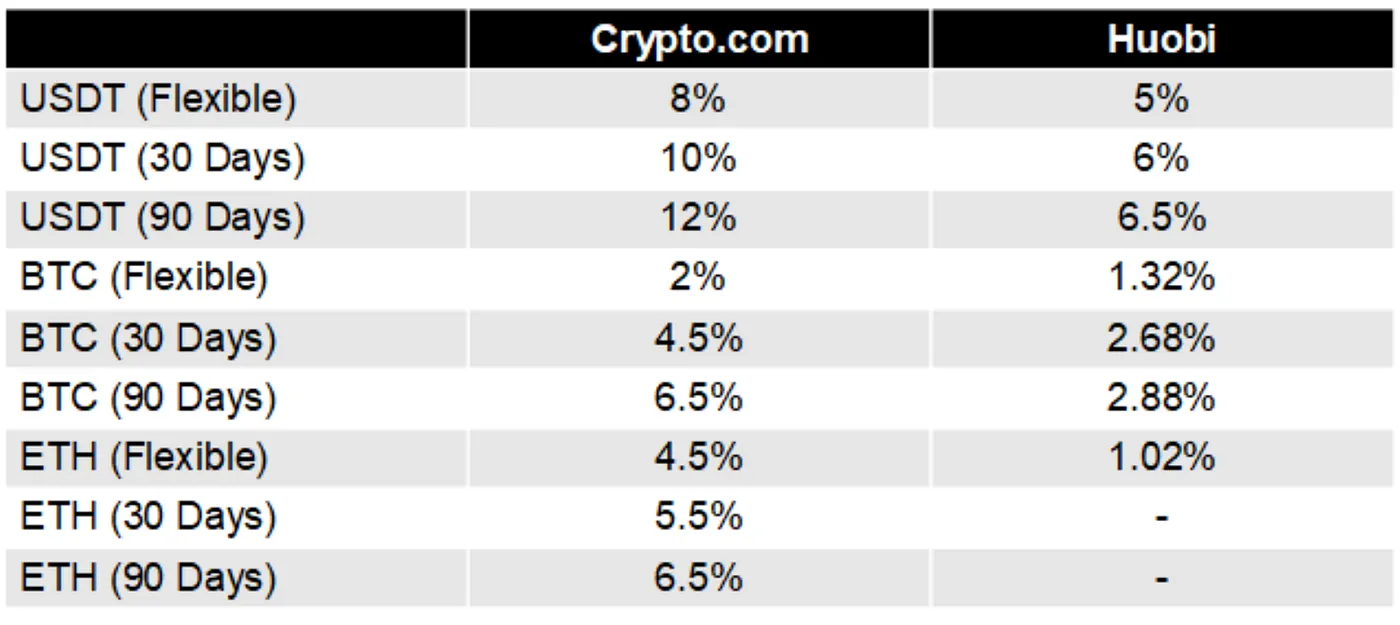
As a starting point, these exchanges will usually auto allocate your funds into a flexible term deposit. This effectively works live a savings account where any assets held in that account will automatically compound based on the exchanges specified interest rate. Users can generally expect up to ~8% APR depending on the asset held, with stablecoins usually demanding the highest interest. These assets can be withdrawn at any time and hence is good choice for users that want the ability to access their funds in a moments notice.
Conversely, users who are willing to lock away their assets can look towards fixed term deposits which will offer higher returns. The exchanges will pay a higher interest as a reward for your lost opportunity cost where you can only get back your funds after the specified time. Depending on exchanges, this can range anywhere from 7 days all the way to 3 months, with the longer terms paying a higher interest.
Personally, I’ve been using Crypto.com (referral) and Huobi (referral)for this, with Crypto.com generally offering better rates. Of note, Crypto.com offers an additional 2% in CRO tokens for fixed term deposits if you lock sufficient CRO with them. This being said, Huobi has a prime earn/featured promotion where they will offer extremely lucrative rates to lock a specific token with them for a fixed period (usually 14/28 days). However, unless you’re checking their offers everyday, it is usually quite hard to catch the timings with there also being an individual cap for each offer.
Reward:
- Easy-to-use interfaces with no need to manage your own keys.
- Automatically earns interest as compared to holding it in personal wallet without staking.
- Easily withdraw funds to trade on the exchange.
- Easily access assets across multiple protocols
Risk:
- You do not own your own keys!
- Regulatory changes results in exchanges being banned in specific countries. These notices can usually be quite short which could result in locked up funds if your fixed term is still maturing.
- KYC is likely required if you are depositing/withdrawing any reasonable sum from these centralized exchanges
2. Staking in Proof-of-Stake Protocols (~5-15% APY)
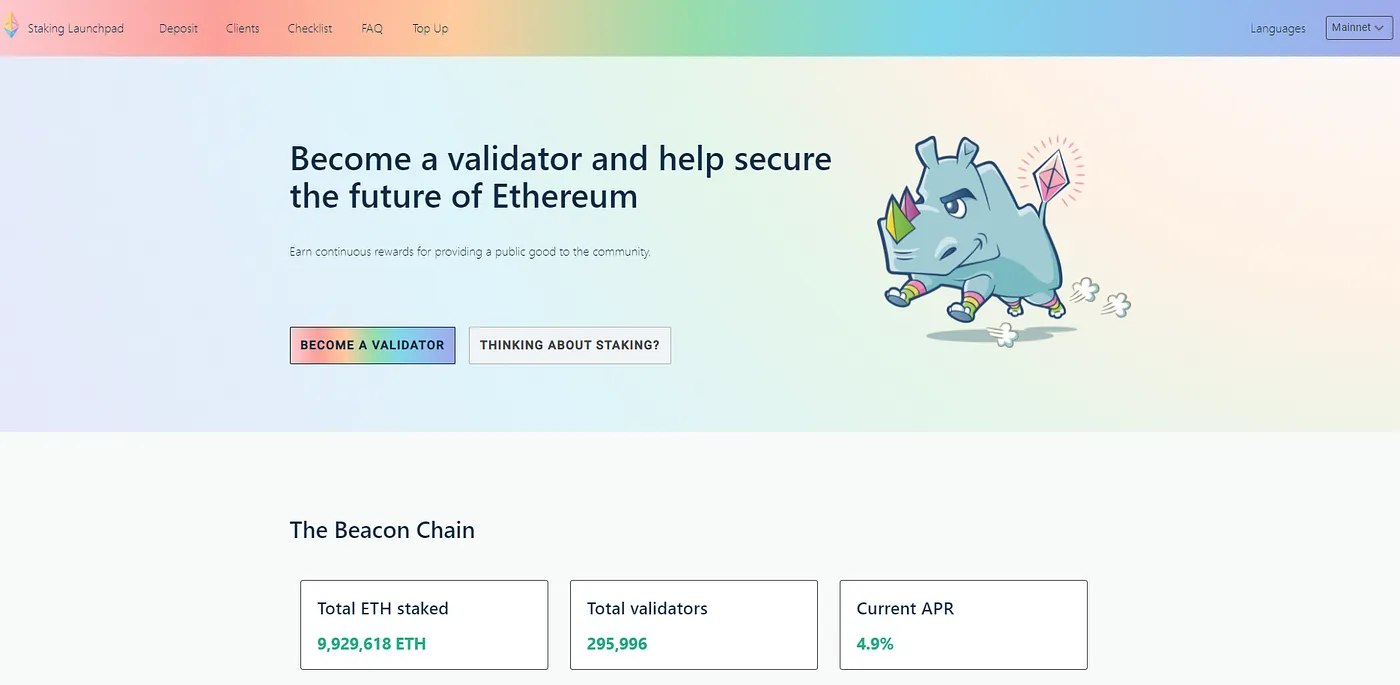
In this case, the protocol itself (ETH, SOL, ADA) is providing you a reward for securing the network by staking your funds with the protocol. The mechanics of this is too complicated for this article, but conceptually, staking entitles the user to be selected to validate transactions with rewards being paid out if consensus is reached. This is ranked second as these rewards are paid out at the protocol level hence security and consistency of the rewards is tied back to the network value. Critically, users also have control over their own keys which means you do not need to trust a third party to custody the assets for you. The accessibility of this boils down to two considerations which are the technical know-how required and the capital requirements to participate.
The safest of this option for most is staking on ETH with it’s upcoming move to proof-of-stake. ETH is the most established of the smart contract protocols hence also making it the best option for those who are less familiar with the crypto space. Users can choose to run their own validator nodes or delegate this technical setup to a service provider for a fee. The main obstacle when it comes to staking on ETH is the capital requirements as staking directly with the protocol requires a minimum of 32ETH. There are other non-custodial protocols such as RocketPool which allow users to pool their funds to setup a node, and users can benefit from this by staking as little as 0.01ETH.
Newer smart contract protocols such as SOL, DOT, and ADA have also been designed from the start with Proof-of-Stake in mind. These protocols generally provide a higher return given that they are less time-tested and are still rapidly growing their communities. Critically, users are able to delegate/nominate a validator by locking their funds with the protocol. This means that users with even a small amount of the protocol tokens are able to participate in securing the network and also receive the corresponding rewards.
- **ETH: **~5% if you run your own node with 32ETH, ~6% staking 16ETH via RocketPool, ~4% if staking less than 16ETH via RocketPool
- **SOL: **~6% through delegated staking
- **DOT: ~14% **through nominated staking
- **ADA: ****~5% **through delegated staking
- **CRO: ~11% **through delegated staking
Reward:
- You own your own keys
- You’re helping to secure and decentralize the network
Risk:
- Requires knowing how to use a crypto wallet
- Your stake can be slashed if your validator misbehaves
- Incurs fees for transacting on the network (which can be significant if your stake is small)
- There is generally a locking period for your assets when staking with these protocols
3̶.̶ ̶D̶e̶p̶o̶s̶i̶t̶i̶n̶g̶ ̶U̶S̶T̶ ̶i̶n̶t̶o̶ ̶t̶h̶e̶ ̶A̶n̶c̶h̶o̶r̶ ̶p̶r̶o̶t̶o̶c̶o̶l̶ ̶(̶~̶1̶9̶.̶5̶%̶ ̶A̶P̶Y̶)̶ (Left in as a painful lesson to be learnt when investing in DeFi)
Anchor is a borrowing/lending protocol which enables users to earn a return by depositing UST (USD pegged stablecoins on the Terra ecosystem) with the protocol. Think of this as a decentralized savings account, the only difference is that this savings account currently returns about ~19.5% yearly. Anchor is able to provide such high returns as it generates income from the borrowers in the ecosystem who are willing to pay a premium in order to gain liquidity by loaning their assets to the protocol. If the above sounds like gibberish, please take a look at Coin Bureau’s explainer on this.
This comes third on the list as it requires a fair share of know-how in navigating the DeFi space but the rewards and capital risk makes up for it. There is no technical knowledge required but users must be comfortable with bridging their assets into the Terra ecosystem. The Terra network has grown significantly in the the past year and proven itself to be quite resilient in the face of extreme market volatility. Case in point, in the recent January market crash, it has managed to hold on to it’s peg with the US dollar.
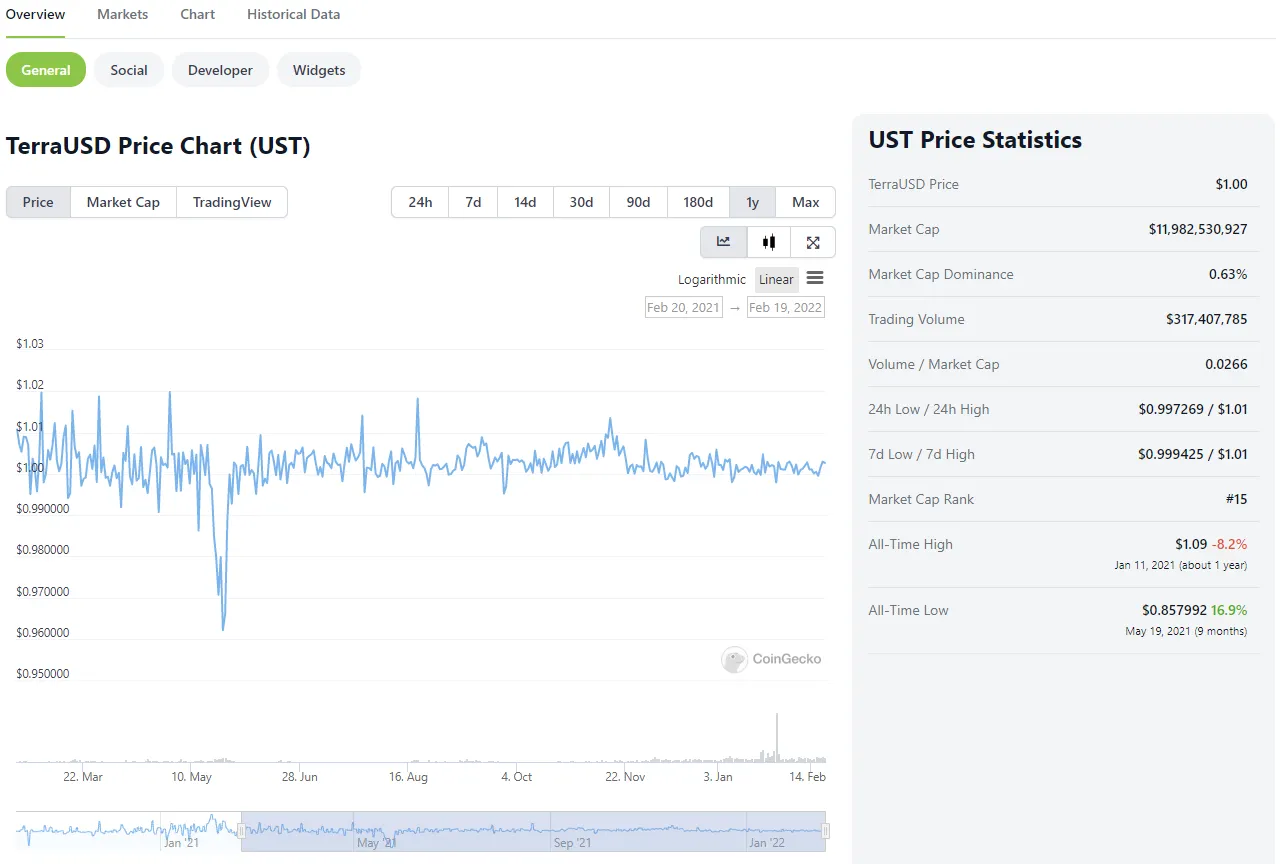
The fact that you will be holding a decentralized USD pegged stablecoin in addition to earning a significant interest on it is the reason why this has now become my main savings account. Critically, you are able to withdraw these funds at anytime as well. The protocol and ecosystem risks are the main considerations but personally, after conducting my own due diligence, this is a trade off which I am comfortable making given that money sitting in my bank account is guaranteed to lose value over time.
Reward:
- More intuitive as users hold USD-pegged decentralized stablecoins
- You own your own keys
- Funds can be moved at anytime
- Anchor interface is relatively simple to use
- Able to insure against protocol hacks and de-peg
Risk:
- Requires knowledge on how to bridge into the Terra ecosystem
- Requires knowing how to use a terrastation wallet on the Terra ecosystem
- Transactions in Anchor incurs a small fee, usually <1UST.
4. Providing tokens to liquidity pools (>30% APY)
This one requires a little bit of knowledge around DeFi concepts, which I conveniently happen to have a piece on here. In the simplest terms, you provide liquidity to the protocol in the form of a trading pair (i.e. a ETH/USDC pair)and earn fees/tokens from trades on that pair. Most liquidity pools will also pay out their own tokens as an incentive for users to lock their liquidity with them. As such, returns from providing liquidity in these pools take the form of trading fees (paid out in the trading pair) plus additional protocol tokens (which can sometimes be quite a significant sum). Returns will therefore depend on the trading activity for that pair and the pool incentives, which combined can result in triple digit percentage returns.
In terms of economics, the liquidity pool is paying you for your loss of opportunity cost whereby you would have been better off holding both assets in a wallet if the price ratio of the trading pair provided differed significantly from when you first entered. Queue another video explainer from Finematics:
This strategy is best when the market is trading sideways as trading fees will be accumulated without the ratio of the funds provided shifting significantly. Newer protocols, such as Uniswap V3, has a concentrated liquidity function which enables returns to be multiplied based on the price range which the user believes the asset will trade in. Concentrated liquidity opens up another strategy for those who prefer cost-dollar averaging up/down a particular asset but still want to earn interest on their assets. By specifying price boundaries, you can be assured that all your holdings will be progressively converted to a single token if that price is hit.
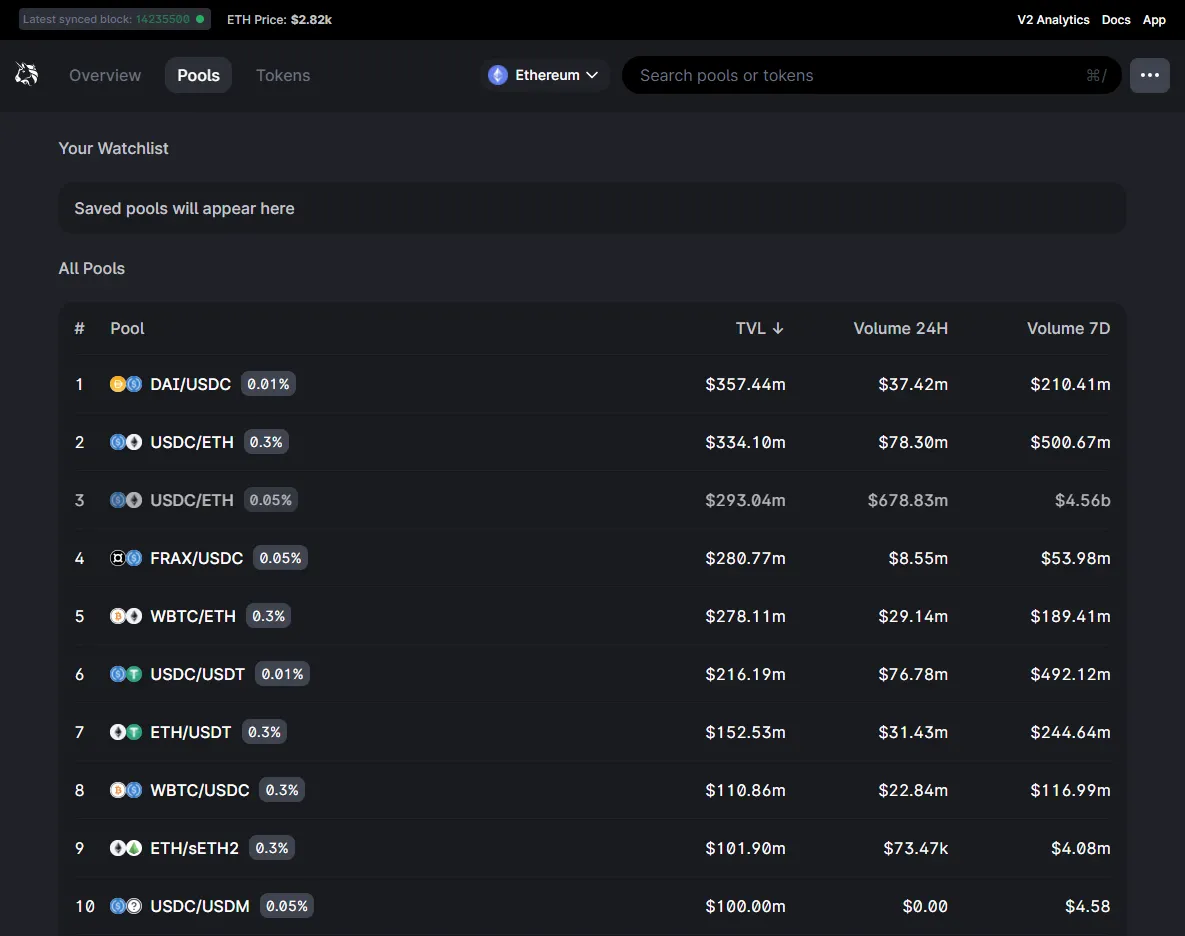
For a start, I recommend looking into Uniswap to get a feel of how it works. This was the original Automated Market Maker Decentralized Exchange (AMM DEX) which has managed to continuously draw billions of dollars of trade and liquidity even without any token incentives. Liquidity pools on ETH are definitely the most popular but the fees of setting up your first pool can be prohibitive as the complexity of the smart contract almost guarantees you’ll be spending more than 100 USD on transaction fees alone. For playing around with the environment, I would recommend switching the network to Polygon. Likewise, it’s also possible to explore DEXes on other networks Trader Joe (on AVAX), Spooky Swap (on FTM), or Astroport/Loop Finance (on LUNA).
Reward:
- You own your own keys
- Returns can be significant even when holding “safe” pairs such as ETH/USDC which has consistently been ~30% gven a +/- 25% from current price
- Helping to stabilize the DeFi ecosystem by providing more liquidity
Risk:
- Impermanent loss as your asset ratio which is withdrawn can be different from when first entered, depending on the price ratio
5. Crypto Node Projects
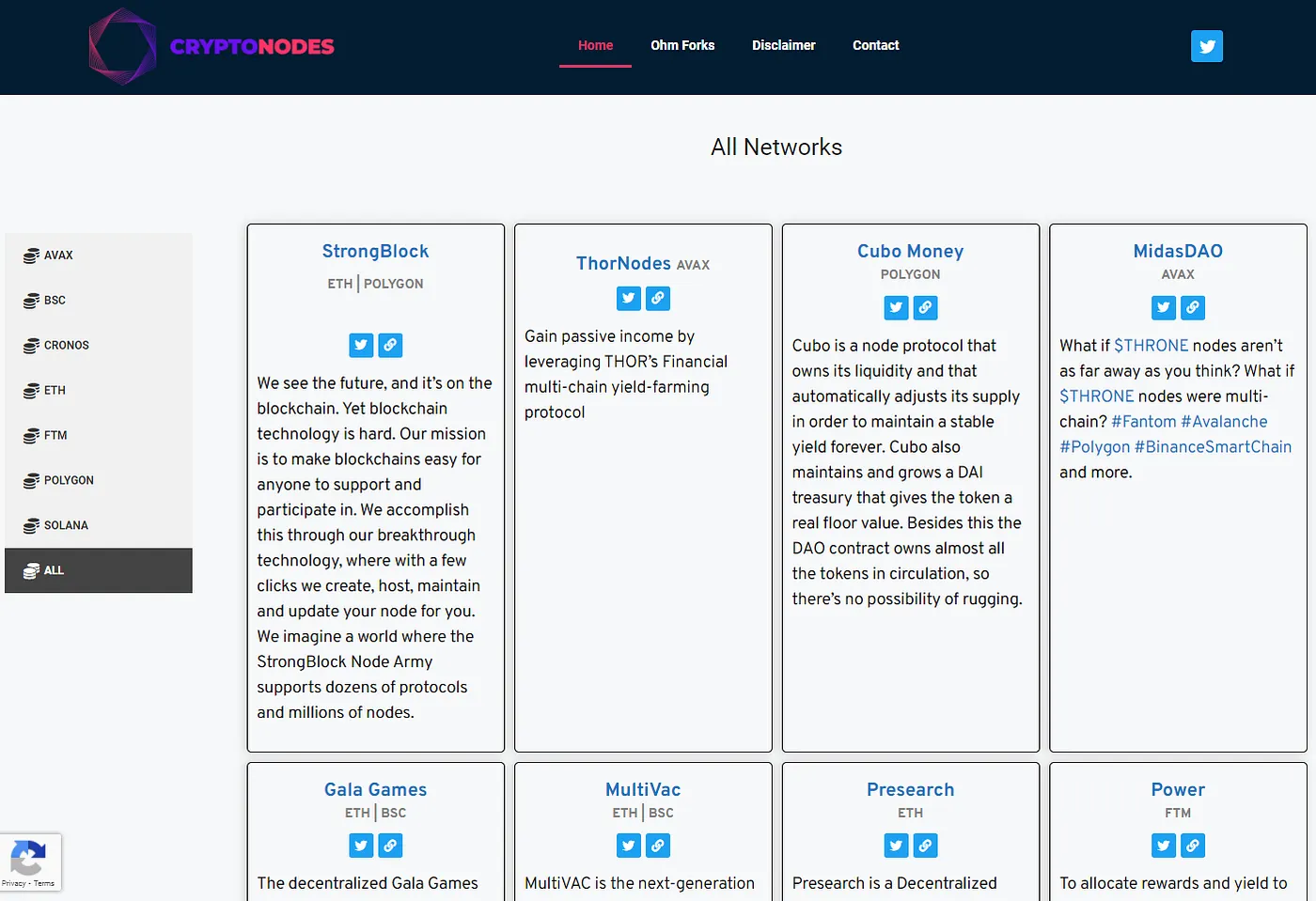
The new up and coming category of “DeFi” investments are what have come to be known as “Node Projects”. Users will usually trade a more popular token, such as ETH, for tokens from that project. What these project tokens allows the user to do is then setup “nodes” in that project by locking up their funds for a specific time period. Generally, the more expensive “nodes” would promise a higher return. Rewards are paid out in the projects tokens which the user can then sell in the open market.
All of the above is to obfuscate the fact that you will be essentially putting your money with the equivalent of a fund manager with the promise of greater returns. The most important thing to note is that these project tokens are a claim to the projects’ value BUT you are wholely trusting the project creator to make good on this promise. You have provided a token of value (i.e. ETH) in exchange for a project token, meaning you can only sell the project token for profit if there is a market for it.
This is the reason why I have thus far shied away from these projects as the projects can easily do a rug pull and run away with your funds. Many of these projects have gamified their ecosystem to such an extent to make it almost detached from the underlying financial mechanics. While crypto is full of such references (i.e. Magic Internet Money, Spooky Swap, Olympus), the extent to which these projects are gamified will likely be misleading to those new to the crypto space.
There are definitely good node projects out there but building enough trust in the projects requires a lot of time to go through their discord or documentation. The level of transparency as to what the projects are doing with your funds are essentially up to them. This strategy effectively boils down to how much you trust the node project to make good on their promises which sounds eerily similar to that of investing with a traditional fund manager.
Reward:
- Some projects have consistently provided high returns and built up a strong community
- Have someone manage your funds on your behalf
Risk:
- You are trading an asset of value for a relatively unknown asset
Financial Freedom?
This article is meant as a starting point for you to get more familiar, and consequently, more comfortable with the DeFi space. If you drown out all the noise around how easy it is to make/lose money in crypto, what you would find are some really interesting projects with solid economic fundamentals. Yes, the crypto space is young and largely experimental with many projects doomed to fail but it is exactly these types of environments where opportunities are found and dogmas are put into question.
The returns in DeFi are so high that it seems unsafe but this is coming from the perspective of growing up in the current financial system. A bank will give you <1% on your savings account but turn around and lend out that money for anywhere between 5–36%. Financial institutions are allowed to charge up to 36% interest on a loan but somehow DeFi strategies returning >10% are considered highly risky.
The most important thing in investing is to do your research while also remaining objective when it comes to diversifying your portfolio. This includes consistently questioning old investment frameworks as the economic structure around us continuously evolves. After asking myself all these questions, the one thing that has become clear is that the crypto space finally provides the average person the financial opportunities which were previously exclusively in the domain of institutions or ultra-high net worth individuals. Whether it is good or bad depends on how you use these opportunities. The question now is are we making the best decisions to gain our own financial freedom or are we leaving this decision to the same institutions with their own interests to protect?