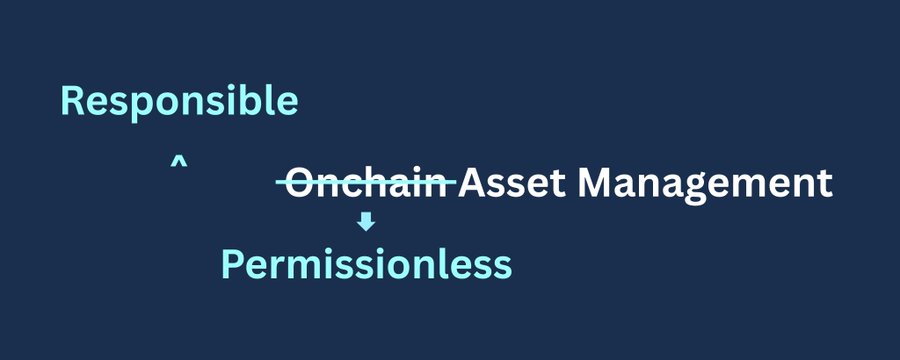
“Accountability not decentralization”
Managing The Risk Managers
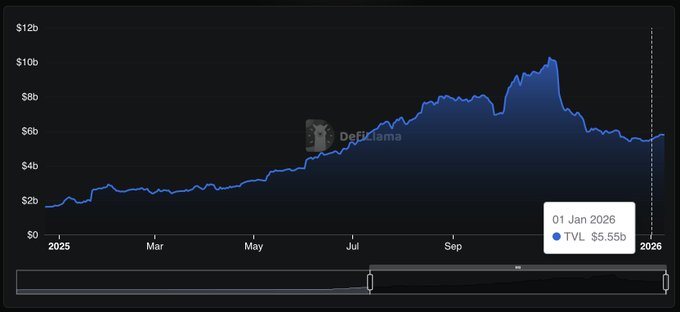
DeFi liquidity flows in 2025 has proven Depositors prioritize convenience over decentralization with Curator managed TVL tripling from $1.69B to $5.55B. Instead of interacting directly with DeFi Protocols, users are increasingly allowing Curators dictate their token allocations. Aside from potentially lucrative management fees, Curators are also empowered with significant economic influence.
Sitting between Depositors and Protocols, Curators’ control of the liquidity levers grows exponentially as more deposits accrue to the Curator layer resulting in:
- Power over underlying Protocol revenues
- Risk management shifting from DAOs/Protocols to Curators
When things are working, Depositor yields are optimized and Curators get paid. When things go wrong, Depositors lose their funds and Curators still get paid.
This conflict of interest exists whenever someone manages other people’s money but it is amplified significantly in a pseudonymous environment. When Curators can just delete their account and start over, there are even greater incentives for excessive risk taking:
- Higher APYs → More Deposits → More Fees → Greater systemic risks
Placing the blame on Depositors for not doing their research is not the way to grow DeFi and neither is gatekeeping onchain asset management to “approved” Curators.
The demand for managed yield products is undeniable but this shouldn’t come at the expense of DeFi’s open and permissionless culture. From verifiable data standards to capital-at-stake models, the future of onchain asset management is being built and this article is an open invitation to shape it together.
Accountability In Pseudonymity
Pseudonymity, the ability to be identified by a fake name (in this case, a randomized address), provide Curators an irresistible option to forego any responsibilities when things go wrong.
Having a Curator “whitelist” increases trust indirectly but raises questions around who has the authority to qualify an “expert”. Requiring Curators to self-identify is a step in the right direction and potentially allows for legal recourse. Nevertheless, such approaches are jurisdiction dependent and risks recreating the same barriers-to-entry as traditional finance.
@yq_acc’s suggestion for identity disclosure requirements after assets under management surpasses a threshold volume is a great balance but we would go a step further to still optionally allow pseudonymity.
Potential Solutions:
- Curator Social Profiles → Depositors place more trust in Curators that disclose their identities but pseudonymous Curators still have other ways to prove their “skin in the game” through pseudonymous reputation [🟢 LIVE].
- Curator Portfolio Performance → Depositors should be able to view all Curator related vaults and have clear information on their past performance and transactions [🟢 LIVE].
- Clear Roles & Permissions → From operator to fee receiver, all addresses affiliated with the vault should be clear [🟢 LIVE] and identifiable [🟡 WIP].
Curators As Risk Guardians
“curator networks concentrate the economically meaningful risk choices…” - @Blockworks_ research report
DeFi composability enables Curators to combine yield sources from multiple protocols into a single vault. While capitally efficient, this adds significant complexity to the vault’s risk profile.
Vaults leveraging multiple markets introduces contagion risks across all markets. DAOs still control Protocol level risks but systemic risks are increasingly centralized at the Curator layer.
Centralization allows for more agile risk management with the only tradeoff being having to trust Curators that are incentivized to take excessive risks.
TradFi asset management has taken a regulatory and reputational approach whereby investment firms require licenses and only employed asset managers can handle client funds. This disincentivizes bad behaviour and ensures a legal recourse post-incident.
Regulatory oversight does have its place but we believe markets are also capable of self-regulating without requiring an authoritative third-party. Aside from encoding risk policy and limits (great read by @srimisra), such disclosures must be obvious to Depositors to facilitate informed decisions.
Potential Solutions:
- Fully Onchain → Depositors always have the right to know how their assets are utilized and can independently verify capital allocations. No opaque off-chain deals that introduces immeasurable risks [🟢 LIVE].
- Token & Protocol Whitelists → Curators can only move liquidity between whitelisted tokens & protocols that are known upfront to Depositors [🟢 LIVE].
- Onchain Economic Safeguards → Deposit safeguards are agreed upfront and contractually enforced to block Curator actions that surpass agreed risk tolerances [🟢 LIVE].
- Configurable Fee Model → Curators must be able to justify their selection of fee types (deposit, withdraw, management, performance) with more speculative vaults earning only performance fees [🟢 LIVE].
- Permissionless Withdrawals → Depositors should be able to unwind their vault position without requiring Curator approval nor having to incur the opportunity costs of waiting [🟡 WIP].
Raising Informational Standards
Onchain Asset Management is key to onboarding the next billion users but this also means catering to more varied users. We cannot expect users to deposit based on DeFi values but rather actual risk adjusted returns.
Publicly verifiable onchain data is insufficient if Depositors need a computing degree to understand it. Moreover, while Depositors are still responsible for their own due diligence, Curators should not be able to get away with providing just a blob of static text in 2026.
DeFi is complex but it is also the Curators’ responsibility to educate potential Depositors. Using alpha dilution as an excuse to provide minimal information is a non-starter as experienced competitors can easily reverse engineer on-chain data. Curators should compete based on reliability and not preferential information or networks.
If we want to do better than TradFi, we must make it easy for Depositors to make an informed decision based on data accessibility. No private deals, no questionable financial relationships, no self-referential reporting.
Potential Solutions:
- Clear Documentation & Risk Disclosures → Depositors should demand baseline information that substantiates yield sources and highlights performance conditions [🟢 ONGOING].
- Public Strategies → Curator strategy flows should be public to allow their expertise to be publicly scrutinized [🟢 LIVE].
- Live & Historical Performance Breakdowns → Blockchain technology enables Depositors to get access to live performance data pulled directly from on-chain sources. Historical data disincentivizes short term yield chasing [🟢 LIVE].
Accountability Doesn’t Stop At Curators
DeFi protocols provide neutral infrastructure but survive on liquidity flowing through their contracts. In the majority of cases, greater churn leads to higher revenues as protocols generally charge a percentage fee. Even without malicious intent, this can lead to design choices that prioritizes volume turnaround over Depositor safety.
As such, DeFi vault providers (ourselves included) should also be kept to the same standards expected of Curators: if you’re earning a fee, you’re also responsible for managing risks. This shared responsibility is especially important given that both Curators and Protocols leverage the other’s brand (see @duonine’s post).
Aside from direct solutions, market-based solutions also provide a supporting role in pushing for accountability. In particular, reducing supply-side overheads (see post by @KamBenbrik and @Yannimoto) introduces genuine competition for managed DeFi products.
When anyone can create and distribute vault products in minutes, the potential pool of Curators grows exponentially. Critically, Curators are protocol-neutral and earn based on strategy effectiveness while Depositors are able to compare across more strategies.
Greater competition within the risk boundaries described above ultimately advances a more comprehensive approach towards vault distribution.
Potential Solutions:
- Forkable Strategies → Open competition where anyone can easily copy a strategy and get access to the same tools forces Curators to justify vault fees [🟢 LIVE].
- Automatic Marketplace Distribution → Automated Marketplace listings enable Depositors to compare vaults based on effectiveness and not the Curator’s distribution power [🟢 LIVE].
- Vault Insurance Fund → A portion of vault revenue should be set aside to underwrite potential loss. TBD: funding split, claim criteria [🟡 WIP].
- Capital-at-Stake Models → Curators should own a threshold percentage/volume of their vault which proves skin-in-game [🟡 WIP].
- Fee Withholding → Fees can be withheld for fixed periods or pending Depositor approval on exit. This can be used in conjunction with the insurance fund [🟡 WIP].
Conclusion
The Curator economy is here to stay and we now have the opportunity to create a fairer and more open asset management ecosystem. No gatekeeping financial rails, less opaque investor networks, more accountability throughout the whole stack.
Curators play a vital role in making DeFi returns accessible to Depositors who might otherwise not have participated. The rise of the Curator layer was enabled by vault Protocols which allowed greater specialization through abstracting onchain asset management.
Nevertheless, specialization also led to warped incentives as accountability became a game of hot potato between Curators and Protocols with Depositors usually left dealing with the scraps.
This article is our ongoing attempt at growing the onchain asset management space without sacrificing decentralization. By reducing vault supply-side overheads, Factor’s goal is to raise industry standards and expectations through open competition. Underlying this is the need for a more comprehensive risk accountability framework that is built through ongoing community feedback.