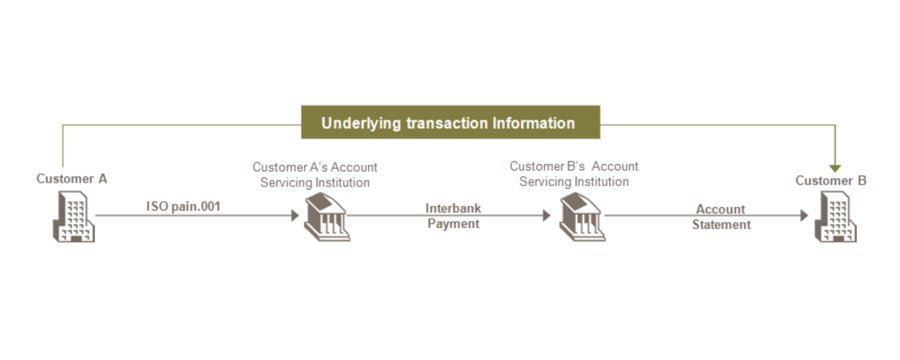
Go back 10 years and just the cost of sending money overseas could pay for 2 whole months of Netflix Premium. It’s not because Stranger Things in 4K is cheap but rather sending any amount of USD was prohibitively expensive and not even on-demand:
- Sender’s Bank Fee: ~ $15 - $50
- Intermediary Bank Fee: ~$10 - $30
- Recipient Bank Fee: ~ $2 - $50
- Currency Conversion Fee: ~ 2% - 5%
- Tracking Fees: ~ $25 - $100 in case of investigations
- Modification Fees: Case-by-case basis
- GST/Taxes: Depending on jurisdiction
The total cost depended on many factors but generally, the larger the amount or the better your banking relationship, the lesser you paid. No matter the case, you still had to wait at least 2 business days for the transfer to complete.
Fast forward to today, transferring stablecoins (i.e. fiat-pegged tokens) costs fractions of a cent and is completed in seconds:
- Network Processing Fee: Average ~ $0.17 on the most secure network with brief spikes depending on traffic
- Swap Fees: ~ 0.01% - 0.3%
The cost and speed of what is essentially a transfer of value has dropped by >100x in a few years. This improves financial access with users being the main beneficiary.
With the rapid advancement of DeFi, such profound changes are no longer limited to just value transfers but extends into more advanced financial services such as lending, exchange, etc.
Note on receiving cash in bank account: Service providers that facilitate off-ramping of USD into bank accounts will still charge a fee and likely require KYC. Users never incur the hefty USD charges if the stable is used as an intermediary exchange of value.
Who Owns The Yield
The next big battleground for financial access is in yields. The ongoing CLARITY Act debate around allowing centralized exchanges (CEXs) to offer their users stablecoin yield brings up an important question:
Who has the right to the yield on a users’s liquidity?
What seems like a straightforward answer is complicated by the fact that the majority of a user’s financial assets are held under third-party custody.
Bank deposits are the most basic example whereby users earn a savings interest for depositing their money into a bank account. By depositing into a bank, users allow their funds to be used for various investments with a portion of the returns being returned to them in the form of savings interest.
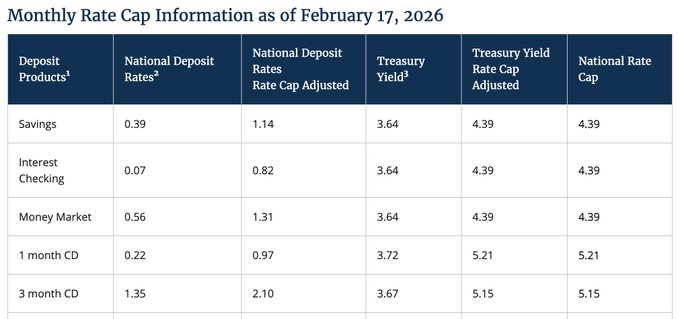
As anyone with a bank account can confirm, the only issue is that the savings interest earned is trivial with the average account earning less than $1 a year for every $100 deposited. This is far below the “risk-free rate” of treasury bonds (~3.5%) and not even close to covering the average inflation rate over the past decade (~2.6%).
Given that users are effectively losing money when depositing, there should be a strong reason why there is such a big gap between the actual yield generated and the savings rate. Such a justification can’t be premised based on safeguarding users or the lack of financial alternatives.
As DeFi services have matured, users now have the ability to earn lending interest via peer-to-peer collateralized lending markets. Moreover, stablecoin providers also facilitate more direct access to USD yields through wrapping DeFi & TradFi USD yields into a single token.
CEXs have taken advantage of decentralized lending and tokenized yield to generate more efficient returns for assets held under their custody. Combined with lower operational overheads, this enables more of the yield to be directed towards the users with baseline returns matching the TradFi “risk free rate”.
The pattern is the same: more open and efficient financial rails results in better outcomes for the end user.
Unmatched Transparency Standards
Aside from improved financial outcomes, another avenue for foundational advancement is in accountability through transparency. Instead of waiting for quarterly reports or annual audits, all DeFi balances and transactions can be validated in real time via a public ledger.
Finance is built on information and access to such data is the backbone of functional markets. The wealth of information available for public markets today is the result of centuries of enforcement against insider trading. Nevertheless, enforcement can only happen with access to timely and accurate data.
What previous scandals in TradFi as well as CEXs have shown us is that dishonest operators are able to prolong value extraction from their users through obfuscating data. A multi-billion dollar audit industry has also sometimes proven to be complicit due to the conflicts of interest of auditing the client that is paying their salaries.
Powered by the underlying technology, DeFi fundamentally changes the data model from reconciling siloed data to publicly verifiable data. This means all critical financial data cannot be gatekept and can be accessed in real time.
If DeFi really wants to onboard the next billion users, this technological advantage must be translated into useful data that anyone can understand. This is becoming increasingly critical with the growing demand for managed financial products which are coming onchain.
Similar to TradFi, the average user will access yields via managed products as more of the financial infrastructure is abstracted. In such an environment, higher informational standards will be key to keeping Curators (i.e. money managers) accountable.
The Need For An Alternative
Much of the technological advancement has been overshadowed by irresponsible speculation, especially in an industry that is prone to hyper-financialization with a tradable token for every idea, good or bad. Narratives drive speculation which in turn funds innovation but it is important not to lose sight of what really matters:
An alternative financial system that is more open and equitable.
For those of us privileged enough, the constant fees might be an inconvenience but it can easily become prohibitive for users with less savings. This is before accounting for the privilege of living in more stable financial regimes with easy access to banking services.
We’re still building DeFi because the presence of an alternative matters:
- Financial access for the underbanked
- Competition based on financial outcomes for the users
- Accountability in an economy that is increasingly going dark
Open financial rails allow users to access such services directly and forces service providers to pass on savings to their users. The presence of a credibly neutral alternative introduces genuine competition into the financial industry which ultimately benefits the end user.