With the fallout of FTX still ongoing, one of the fundamental questions that have been brought to the fore again is self-custody:
Not Your Keys, Not Your Crypto
This adage while often repeated, tends to explode in popularity whenever something catastrophic happens to a crypto-based business: Mt Gox, 3 Arrows Capital, Celsius, Voyager Digital, and now FTX. The unifying theme behind all these businesses is that their business model depended on them holding crypto on your behalf. Once crypto was deposited onto these platforms, users usually had little knowledge of how their funds were being managed, or in this case mismanaged.
Given that these companies were managing billions of dollars, a more essential question to be asked is:
Why entrust funds to a third-party when crypto enables direct ownership?
While this is a simple question of ownership, the implications are likely to redefine much of society as we know it today.
Self-custody: What’s the big deal?
The Cambridge Dictionary defines custody as:
In the context of crypto (or more generally digital assets), this effectively means that a custodian holds the asset on your behalf and is responsible for safekeeping and moving said assets based on your instructions. What this definition glosses over is the “legal right or duty” as this is an immensely loaded term which we will get to shortly.
The fact that the term “self-custody” even exists speaks volumes about how we take many of the structures today for granted. To truly understand how absurd this is, we can effectively rephrase it without losing its intended meaning: holding assets on behalf of myself. This goes to show how deeply ingrained our biases are when it comes to safekeeping and ownership of assets. As such, to approach this objectively, we first need to understand how this came to be.
Custody Oversimplified
The concept of custodianship can only exist after that of private property/asset. In other words, people had to own an asset before it could be cared for by another person. In between the discovery of these 2 concepts, the owner of an asset was whoever that was physically holding the asset in their possession. This meant that the asset owner was ultimately responsible for safekeeping the asset up until the time that it needed to be used.
Although society has progressed significantly since then, the main idea behind custodianship is still that of protecting the asset from harm, damage, loss, or theft. Consequently, this safekeeping role necessarily evolves with the times as safekeeping differs based on the properties of the asset. From a financial perspective, it isn’t difficult to speculate how custody services came about especially before the digital age.
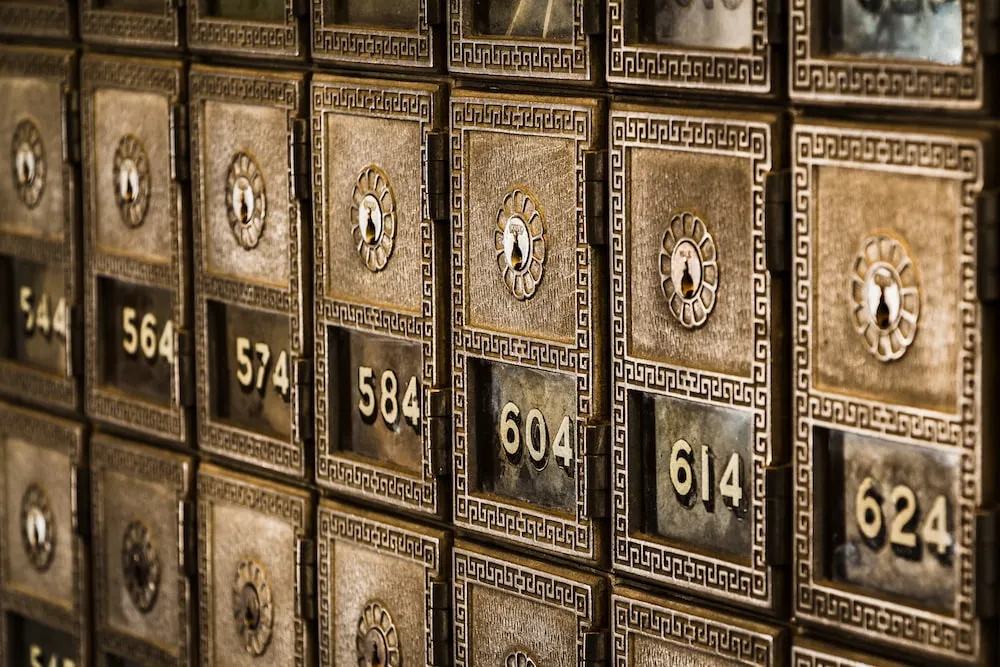
With physical money, any accumulation of wealth brings with it exponentially more risks. This not only includes the risk of theft as your community gets wind of your wealth but also the risk of the money deteriorating from improper storage. While what counts as a significant sum is subjective, the costs of proper safekeeping is objectively resource intensive. From hiring security to building environmentally controlled vaults, such levels of safekeeping only make economic sense to the majority of people when the costs are distributed (i.e. economies of scale). As such, centralised custodians provided a cost-effective form of safekeeping in exchange for a fee and temporary ownership of your asset.
At the core of this custodial relationship is trust: it doesn’t matter how cheap your custodial services are if I am not confident in getting back my money in the future. Initially, this trust would have been based on the custodian’s reputation but as governments form, regulations will start to add an additional layer of security. The governments monopoly of violence ensured that they were able to enforce the “legal right or duty” in the court of law if required. Whether these regulations were in favor of the user or custodian depended on how closely related the custodians were to government.
Critically, notice that the scales of power is very much tilted in favor of centralised entities due to their ability to better safekeep cash as a physical asset. The scales are slowly tipping with the advancement of technology, as there is no longer a need of physical cash nor a centralised ledger to track fiat balances. For the first time, users practically had equivalent levels of security while holding their own digital assets. Public blockchains was a big step towards empowering individuals but what were the tradeoffs?
Custodial Value-Added Services: Convenience vs Autonomy
Although technology made safekeeping digital assets a non-issue, what is undeniable is the convenience which custodial value-added services brought. To be clear, these services are not part of a custodians core business but significantly contributed to the asset management experience. Specific to crypto, these were some of the services where custodians were able to provide a better user experience:
- **Key Management: **As the crypto was held in the custodians wallet, users did not have to worry about losing their private keys. This is especially so if the user held multiple cryptos across different chains. Remember that in crypto, losing your private keys meant losing your crypto. Users could instead fallback on the familiar “forgot password” process.
- Transaction Safeguards: Crypto wallet addresses are not human-readable and trnasactions are irreversible. Hashed addresses (i.e. my ETH address:
0xB39f45dE478b4f5Cca77E02677fB8D2a4F60A123) could easily result in a typo and once the transaction was sent, there was no way to recover my sent funds. Custodians added an additional user interface layer which made users more comfortable with transacting crypto. - **Exchange Services: **All custodian customer funds were held by a single entity hence any trades between customers is a simple update of the custodians internal books. This meant greater opportunities for profit trading via faster transactions and no gas fees. Critically, users could also trade across different chains without understanding the underlying technical differences. Furthermore, users could still trade based on the familiar order book model instead of having to learn DeFi’s AMM.
- Tax & Accounting: Having all your crypto in one place means that accounting for all the movement, trades, and dividends is made much simpler if the custodian has the proper accounting practices in place. This is especially so if users are actively utilising their cryptos across various chains/coins/tokens.
- Fiat On/Off Ramps: New crypto users are able to directly trade their fiat for crypto as most exchanges have a foot in the tradFi space. There is less risk obtaining crypto via a well-reputed custodian vs trading in the peer-to-peer space.
The unifying theme across the above services is that of convenience. As the decentralised counterpart for each is still being battle-tested, centralised entities are able to front-run these basic user experience necessities. More important to notice is how closely this user experience mimics the existing financial ecosystem which people are familiar with. Real adoption of this technology hangs on the willingness of users to take more responsibility over their own finances. This is an especially tough ask for a society that has grown accustomed to the current power dynamics. Such a significant change necessitates a significant amount of education and uncertainty which places individuals in an uncomfortable position.
Financial Autonomy: Is the added responsibility worth it?
The question then is whether the benefits of self-custody outweighs the added responsibility. Each individual will have a different response based on their familiarity with the technology and social context. Getting people to think outside the current custodial paradigm will take a lot of education and time. Crucially, whether they decide to dabble in the self-custodial route, they will have been empowered with the freedom to choose due to having the requisite knowledge. Objectively speaking, diversification is always one of the best ways to manage portfolio risks.
It is the social context which will be a significant push factor for the majority of people. Outside those of us who are fortunate enough to be able to endure the risks due to the pull factors of the technology, the catalyst of change for most is necessity not desire. This necessity will be driven by how the social contract between individuals and institutions continues to evolve (i.e. do you trust your governments/banks/etc). The FTX debacle is a prime example how this can change so rapidly from users preaching financial pseudo-autonomy one week, and the next week calling for governments to regulate and persecute the very party they had admired.
While history is doomed to repeat itself, the persistent march of decentralised technologies ensures that with each iteration, users will have the tools required to counteract the corrupting forces of centralisation:
- Ethereum Naming Service**: **Enables Ethereum addresses to be formatted in a more human readable form. For example, you can interact with my ETH wallet via
awkaishin.ethinstead of having to quote my whole address in hexadecimals (i.e.0xB39f45dE478b4f5Cca77E02677fB8D2a4F60A123) - Aave/Compound**: **Lending/Borrowing of crypto assets directly from your own crypto wallet.
- Uniswap/Curve/Bancor**: **Decentralised exchanges that enables instantaneous trading of on-chain assets without a middleman.
- Polkadot/Rubic**: **Cross-chain technologies that facilitate trades across different blockchains.
- Beefy Finance/Autofarm**: **Crypto vaults enabling yield generation via decentralised market making.
- Nexus Mutual**: **Decentralised mutual insurance protecting against smart contract failures and exchange hacks.
- Dune/Defi Llama/Ape Board**: **Crypto portfolio & analytic dashboards that allows easy management and tracking of crypto assets.
All the above services are built on top of a self-custodial infrastructure where ownership of your crypto assets never gets transferred to a custodial middleman. Moreover, this list only contains those which I have personally had the chance to experiment with and therefore only forms a subset of the massive innovation that is happening right now in the space. With time, the overall user experience on non-custodial rails will match or even surpass that of traditional custodial structures.
The change will come in waves as evidenced by Uniswap achieving a 2022 high of new user count following the FTX scandal and even overtaking Coinbase as the second largest crypto exchange:
As more people get to experience the autonomy afforded by non-custodial solutions, they will be able to individually assess it against the actual additional responsibility that non-custodial solutions require. True user choice comes via practical experience rather than being presented a false choice via coercion.
With this management overhead continuously shrinking, one thing for certain is that people don’t give up power because they want to but because they are forced to. In this context, ownership is power as it means that you are always in control of your own assets.
The Power Tug-of-War
While blockchain technology is neutral, its practical implementation can be the difference between a more fair society built on equal access to the technology or a dystopian world where those with power decide whether to trickle down the benefits. Self-custodial solutions are an important step towards the former as ownership of the asset means your assets can’t be arbitrarily ceased or censored. This is more pressing where users are completely at the mercy of institutions which gather under the all-encompassing banner of “consumer protection” ( SWIFT Russia Sanctions, China Freezing Bank Accounts, US Fed Sanctioning Tornado Cash Software).
Custodial solutions will continue to have an important role to play as it enables its users to sidestep some of the fundamental user experience bumps of non-custodial solutions (fees, tx speed, additional guardrails). Nonetheless, it will be forced to become increasingly transparent as users demand for more accountability not decentralisation. Non-custodial solutions will be the alternative option which keeps these custodial platforms in check as absent this trust, the management overhead for self-custody is increasingly shrinking.
Self-custody is about ownership, ownership grants control, control leads to power, and with great power comes great…
Institutions have always had the upper hand in this power tug-of-war as custodianship was a prerequisite to accessing the related services that were necessary in modern society (payments, trades, proof of identity). This fundamental assumption no longer holds true with the advent of self-custodial technologies as ownership is no longer determined by those with outsized power. In other words, I don’t need someone else to tell me what I own. After centuries of technological progress, we’ve come full circle to the true meaning of ownership, although this time it’s called “self-custody”.