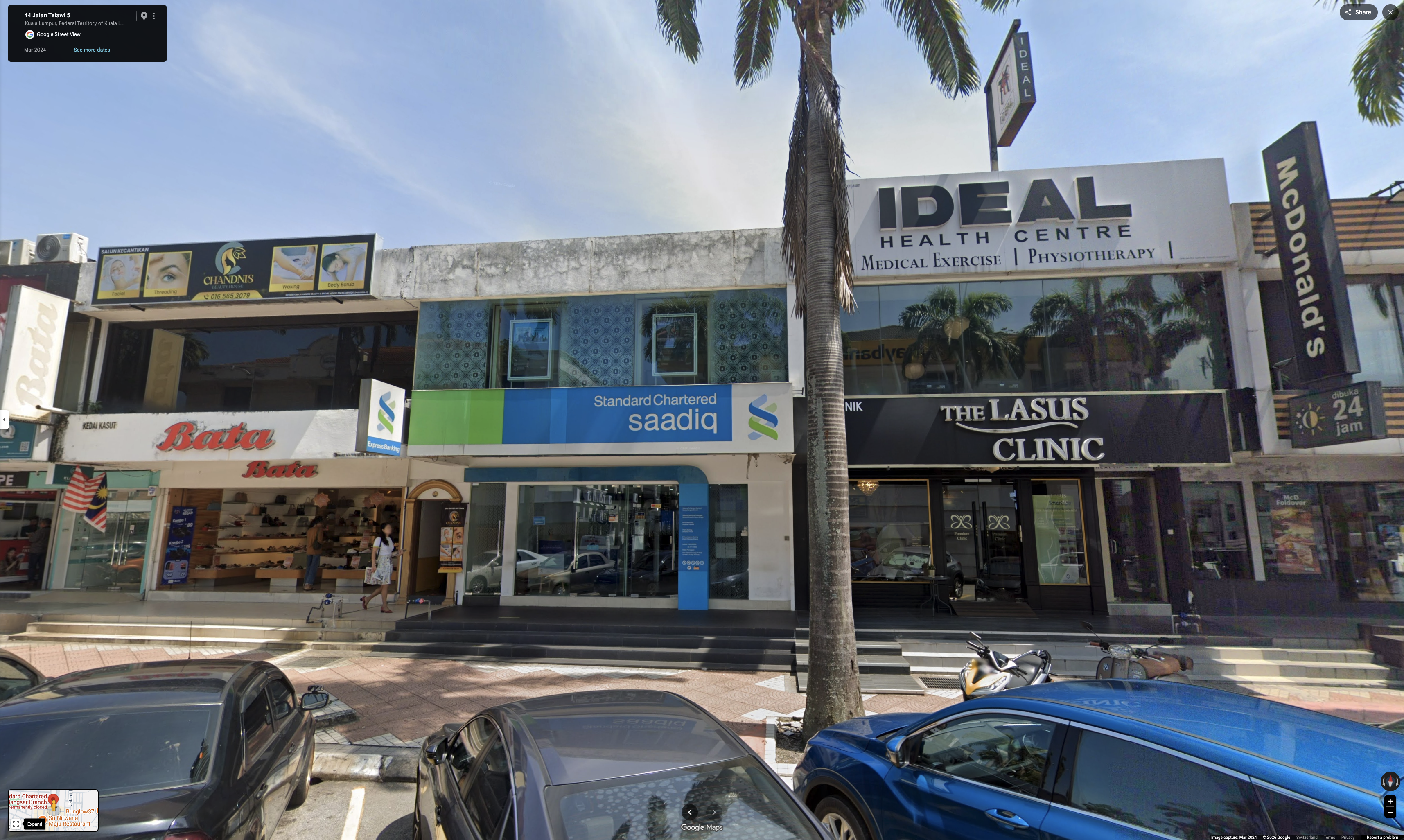
Growing up in Malaysia, “Islamic Banking” has always been a common sight flashing by the car window as we drive down rows of shophouses. As a younger and more innocent Chinese boy, my assumptions about Islamic Banking have always been “no interest” and “Muslim only”, both of which stray from the truth. This is an exploration into how Islamic Banking actually differs from conventional banks and why you should care.
Why It Matters Even If You’re Not Muslim
First off, anyone can open an account at an Islamic Bank, not just Muslims. There is also nothing stopping a Muslim from opening an account in a conventional bank. In fact, in a 2024 survey of 1,000 Malaysians, 73% own at least one Islamic product. With 63% of survey responders identifying as Malay (constitutionally Muslim in Malaysia), this indicates that there is real demand for Islamic financial products outside of religion.
73%
of 1,000 surveyed Malaysians own at least one Islamic financial product, against the 63% who identify as Malay (constitutionally Muslim in Malaysia) in the same survey.
What's stopping the other 27%?
Religion ranks last among the stated reasons. Lack of awareness dominates instead.
This goes beyond just the marketing on “ethical financing” as there are some real practical benefits that Islamic banking provides that conventional banks structurally can’t match:
- Repayments are capped - In Malaysia, there is a contractual ceiling on how much you can be charged each instalment.
- Capped and non-compounding late payment charges - A 1% p.a. cap (ta’widh) on overdue payments for personal financing and mortgages while your loan is active.
- Penalty payments received by the banks must be donated (Gharamah) - Banks are legally obligated to redirect penalty income to charities instead of capturing it as profits.
- Fixed cost certainty for specific loan products (Murabahah) - Instalment payments are fixed at signing (excluding waivers) and carry through for the period of the contract.
- No early settlement fees plus a mandatory rebate (Ibra’) - Zero fees for settling your loan early with the bank required to rebate the profit portion.
- Products that align with customer values - The businesses underlying the industry are screened based on Shariah-compliant principles (e.g. no gambling, alcohol, etc.).
Is There Really “No Interest” Charged?
Suppose you need RM1,000 to buy a phone and are willing to pay me for a loan. I can:
- Lend you RM1,000 in cash upfront for you to purchase the phone yourself. You pay me back RM1,200 in cash.
- Buy the phone myself at RM1,000 and sell to you at RM1,200 in fixed instalments.
In both cases, you ultimately end up paying me RM1,200 but only the second case passes the Islamic Banking test. The difference is that I first owned the phone and sold it to you at a disclosed markup. The profit I made was justified as I was involved in the purchase of the phone rather than just lending you cash.
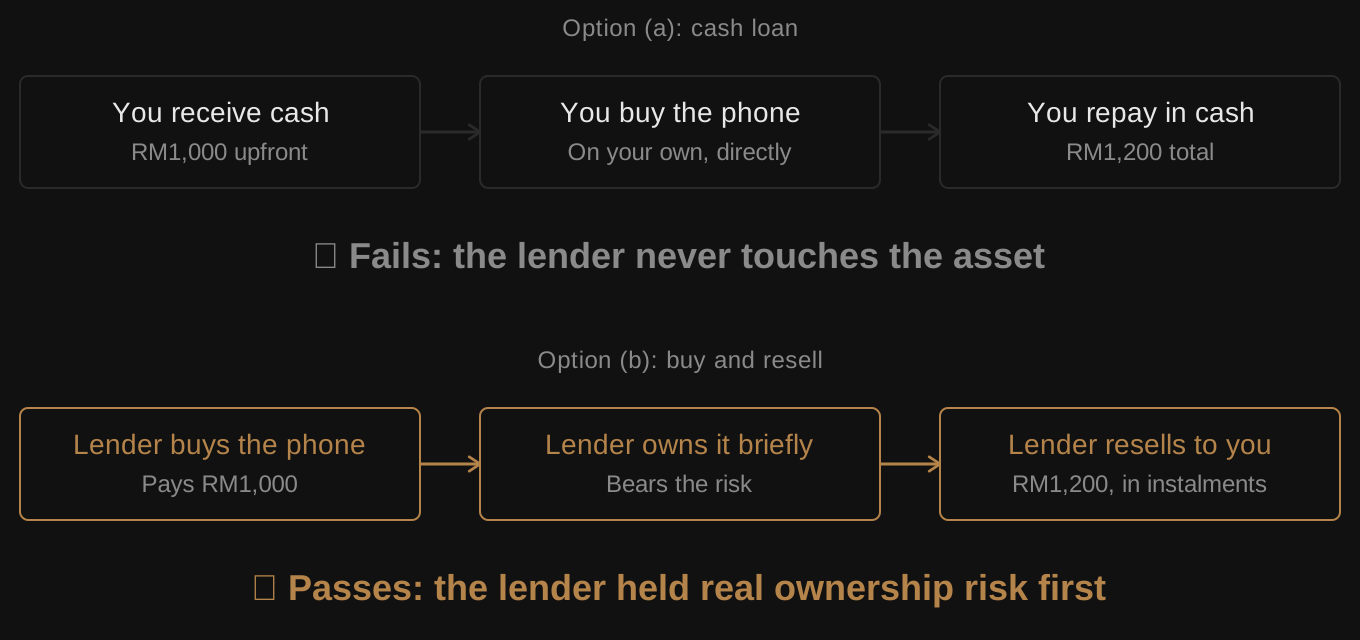
This idea of temporary ownership is a core pillar (Murabahah) of Islamic Banking as the lender must actually own the asset before selling it. The lender bears full responsibility over the asset between purchasing it and then selling it to the buyer. After the sale, the risk passes entirely to the buyer. This is unlike conventional banking where the lender never touches the asset and profits from the time the loan is outstanding, rather than from any real risk taken.
Historically, lenders were taking genuine risks when physical goods took days to even months to be delivered (e.g. shipping via Malacca straits). With the advent of modern contract law, parties could now get monetary exposure to the underlying asset without ever touching the physical asset. The advent of the internet and the economic digitalisation has abstracted this even further while simultaneously allowing transactions to settle in fractions of a second.
If we both went to the phone shop together and I immediately transferred you the phone after I purchased it, did I undertake any real risks? Now imagine that receipt represents a car and I pass you the keys directly at the dealership without ever driving the car. As a lender, am I really taking any practical economic risks? Current principles sidestep this question and instead ask whether you wanted the phone/car in the first place.
Whether the buyer has any genuine interest in the asset being purchased (fiqh) is foundational to any Islamic loan product. If you really wanted to use the new phone, the time that I was exposed to the risks of holding that phone becomes irrelevant as the transaction flow fulfills the contractual requirements of the lender owning the asset first. However, if you only wanted to resell the phone for cash or profit, your intent makes the sale illegitimate as you had no actual interest in the phone. The asset becomes a formality, not a purpose allowing cash transactions to masquerade as a sale contract (Tawarruq).
”No Interest” Is The Label, But What Are The Actual Results?
Coming back to the real world, does any of the above actually show up in what you pay? Islamic Banks do not operate in isolation and must remain competitive within a global financial system built around interest rates. Setting principles aside, Islamic financial products must also be competitively priced, which allows us to compare the practical outcomes against the conventional banking route.
Market reference rate
Your ceiling, fixed at signing
What you actually pay
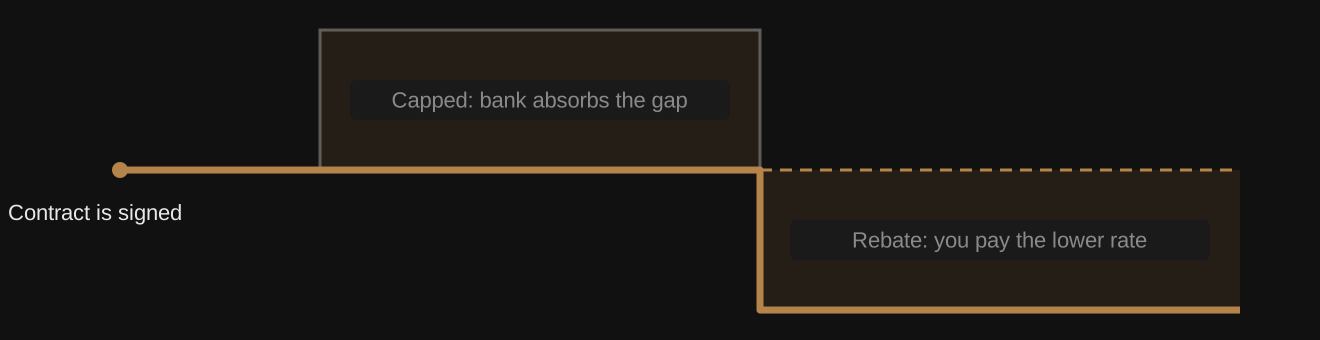
Your ceiling is fixed once, at signing, but the market rate keeps moving after that.
One of the most interesting aspects of Malaysian Islamic Banking is that there is a contractual ceiling which caps how much you pay each instalment. This ceiling is fixed at the point of signing the contract with the borrower paying a fixed instalment amount throughout the life of the loan. How do Islamic Banks price the loan while being able to compete with conventional banks?
This is the first place where it gets tricky because the Islamic loan needs to reference a moving target. In reality, this means referencing an interest rate (OPR) which is set by Bank Negara Malaysia at every committee meeting. What happens when this reference rate changes relative to the fixed contract price is even more interesting. Such loans specify a rebate mechanism (Ibra) where the bank will repay the borrower if the current rate is below the ceiling rate which was fixed at contract signing. If the current rate goes above the ceiling rate, the bank absorbs the risks.
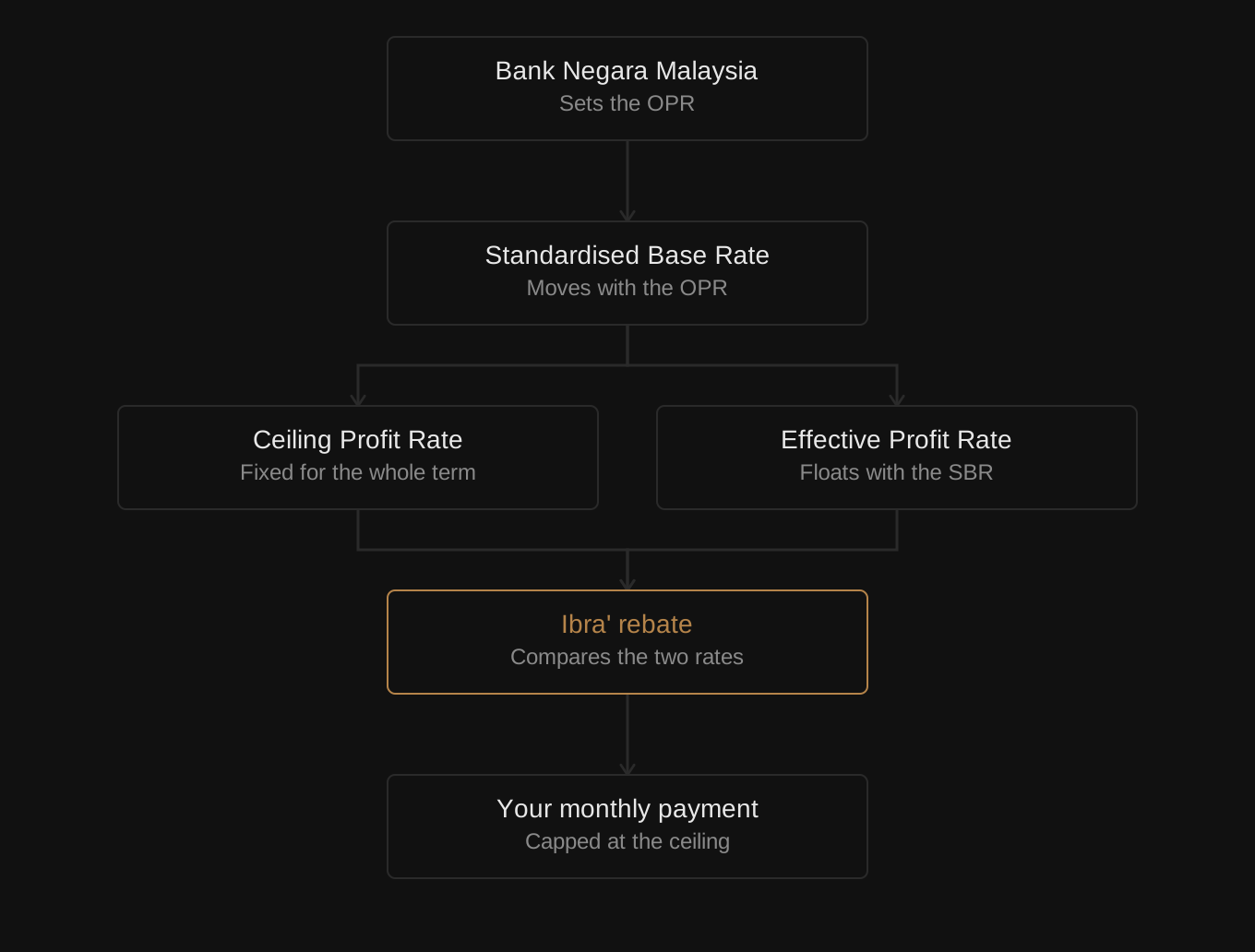
The practical effect is that a fixed “no interest” loan that the average Malaysian sees is fundamentally priced based on an interest rate provided by the Malaysian central bank. Moreover, the borrower’s actual cashflow behaves very similarly to a conventional banking loan.
This is especially the case since the reference rates have been identical over the past 11 years. In simple terms, pricing across Islamic Banking and conventional banking in Malaysia has essentially moved in parallel with minimal practical differences. The one subtlety here is that the Islamic reference rate tracks a value aligned basket of assets with shallower liquidity.
BLR, Base Lending Rate: the conventional reference rate
BFR, Base Financing Rate: its Islamic equivalent
Based on the above, Islamic Banking competitiveness in reality mostly hinges on legal differentiation rather than pricing or structural differences when compared to conventional banking.
Competitiveness In A Rates-Dominated World
Given that the start of Islamic Banking in Malaysia traces back to 1983 with the founding of Bank Islam Malaysia Berhad, it could also be argued that there weren’t any alternative models due to historical precedent. Initial customers would have had to migrate from a rates-based conventional system. Moreover, introducing a structurally different system would require significant education in what is already a conservative industry. In fact, the Malaysian model is one of the most liberal, prioritising market competitiveness and standardisation over stricter doctrinal conservatism.
We’ve already established that pricing is not a major differentiator. As such, Malaysia’s continued Islamic Banking competitiveness comes from:
- Industry aligned targets - Malaysia’s central bank, Bank Negara Malaysia, has previously set a policy target for 40% Islamic finance market share by 2020, which has since been met. Industry commentary has continued extrapolating this framing to an unofficial 50% target.
- Government aligned demand - In 2024, an estimated 53.6% of the government’s total gross borrowing was raised via Islamic bonds (sukuk), around RM110 billion. Similarly, almost half of Islamic Banking’s RM1.3 trillion asset base comes from EPF’s Shariah pool (provident fund), ASNB (unit trust manager), and Tabung Haji (Hajj pilgrimage fund) combined.
- Preferential tax codes - Islamic home financing benefits from a 20% stamp duty exemption. Further tax exemptions for Shariah-compliant financial services operating from Labuan, in place since 2024, show real but limited uptake. There is also a tax exemption on trading fees for Bursa Suq al-Sila’, a purpose-built platform that contractually wraps commodity trades to satisfy ownership requirements.
- Shared pricing infrastructure - Instead of overhauling the existing financial plumbing, Islamic Banking can reuse the rates-based infrastructure but just reference an Islamic-equivalent rate derived from the same underlying base rate.
- Shared distribution channels - Islamic Banking licenses are issued to conventional banks allowing them to set up an Islamic vertical which reuses much of their networking and distribution infrastructure.
~50%
of Islamic Banking's total asset base
~RM650B
of the RM1.3 trillion total
Concentrated in just three government-linked institutions: EPF's Shariah pool, ASNB, and Tabung Haji.
A large portion of Islamic Banking’s competitiveness therefore comes from government policy rather than outright pricing advantages. While conventional banking also benefits from state-linked liquidity, Islamic Banking is provided competitive advantages in terms of explicit growth targets and tax exemptions.
Do Malaysia’s Policy Decisions Benefit You?
The fact that Islamic Banking is structurally supported via government policy will not come as a surprise to most Malaysians. What’s more interesting is whether such policies benefit Malaysian consumers as anyone can access such Islamic financing products.
In Malaysia, the Shariah Advisory Council has the sole authority to determine whether a financial product or practice is Shariah-compliant, a determination which the courts must abide by. This centralisation provides consistency across Islamic Banks but SAC’s decisions can’t be reviewed. This inability to challenge a decision is coupled with the fact that SAC and its members carry broad legal immunity. As such, you have no legal avenue against SAC if you believe you have been wronged as part of signing the Islamic financial contract.
This extends to general accountability as well. Islamic Banking shares the same conflict of interest as conventional banking whereby the people reviewing the consumer benefits of a product are paid by the same bank selling it to you. The difference in Islamic Banking is the additional Shariah-compliance layer which isn’t held to the same disclosure standards. Unlike conventional bank disputes where courts can rule against the bank on public record, anything touching the Shariah layer gets routed to SAC instead with no independent review and minimal public disclosures. No public record can be found of SAC or a bank’s own Shariah committee ever ruling against the bank’s own interest.
Specific to home financing in Islamic Banking (Musharakah Mutanaqisah), there is also legal uncertainty as to what happens to your ownership stake if you default, an issue still unresolved as of a 2019 study. Even the enforcement of contract terms specific to the bank you signed with remains uncertain as there is no publicly available record of a Malaysian court ever testing this question. Conventional mortgages do not face this issue and can be more reliably settled via the standard foreclosure process.
A real consumer benefit absent in conventional banking is that Islamic Banks are legally required to donate penalty income to charity instead of capturing it as profit (Gharamah). While this policy genuinely benefits consumers, there is no public record of how much or where this money goes despite BNM reporting requirements. As such, there isn’t a way to validate who actually benefits from these funds.
Courts interpret and rule on financial disputes directly, and their rulings are part of the public record.
The Shariah Advisory Council has sole authority to determine whether a product is Shariah-compliant, and courts must defer to its rulings. Those rulings can't be appealed, and SAC members carry broad legal immunity.
Shares the same underlying conflict of interest as Islamic banking: the people assessing consumer benefit are paid by the bank selling the product. But disputes that end up in court produce a public ruling.
Anything touching the Shariah layer gets routed to the SAC instead, with no independent review and minimal public disclosure. There's no public record of SAC, or any bank's own Shariah committee, ever ruling against the bank's own interest.
Mortgage default is settled through a well-established, standard foreclosure process.
Musharakah Mutanaqisah home financing carries real legal uncertainty over what happens to your ownership stake if you default, still unresolved as of a 2019 study. There's no publicly available record of a Malaysian court ever testing the question, or even enforcing contract terms with a specific bank.
Late-payment income is captured as bank profit, same as most personal financing.
Islamic banks are legally required to donate penalty income to charity instead of keeping it as profit, a genuine consumer benefit. But there's no public record of how much is collected or where it goes despite BNM's own reporting requirements, so there's no way to actually verify who benefits.
Crucially, Islamic Banking is held to the same general standards as conventional banks with a few exceptions around Shariah-compliance, legal recourse, and disclosure requirements. Many of the marketing claims hold up on paper but the lack of transparency and accountability makes it hard to validate if Islamic Banking is truly more beneficial for Malaysian consumers.
What Does This Mean For You?
For those just looking for the best prices, treat Islamic financing as just another option for comparison. Both Islamic and conventional banking derive their prices from the exact same interest rate provided by Malaysia’s central bank. Islamic financing and mortgages do provide a distinct advantage when it comes to non-compounding late payment charges as well as capping the maximum you pay each instalment. On the flip side, there is no path to legal recourse if you believe you were wronged.
For those who are value aligned with Islamic Banking, you aren’t sacrificing much. Islamic Banking in its current form already provides all the core financial functions with only a handful of tradeoffs: legal uncertainty surrounding home defaults, no legal recourse, gaps around disclosure and transparency. Legal uncertainty will eventually be resolved by the courts but accountability requires changes in governance.
For those that are just curious, Malaysia’s Islamic Banking sector mainly differentiates itself through legal and contractual definitions rather than offering a fundamentally different product. Islamic Banking functionally replicates most of what conventional banking already does with much of its scale and competitiveness being sustained through national policy.
If it walks like a duck and talks like a duck, it still makes for a great meal either way. This is the Malaysian way.