
With a combined market cap easily surpassing 100B even in this bear market, it is safe to say that stablecoins have already carved out a spot as one of the fundamental building blocks of the crypto-economy. Admittedly, stablecoins would probably not have seen such explosive growth if it wasn’t for the rise of DeFi as users were hungry for an on-chain token which they could conveniently transact with. Stablecoins were the best option, providing users with a relatively stable point of reference when it came to valuing and timing their trades.
At the core of all stablecoin implementations lies a fundamental challenge which has plagued humanity for generations and that is the subjectivity of valuations. With such a colourful history, this issue is not exclusive to cryptocurrencies but rather any form of money in general. This article won’t dwell on the philosophical musings of value but having a basic understanding of the purpose of money will aid greatly, not only in understanding this article but for life in general. To this end, the same principles which were covered in an earlier article on crypto valuations applies here. With the fundamentals covered, a good place to start in order to predict the future of stablecoins is to understand what exactly stablecoins are “stable” against.
Why the US Dollar? (Fiat-backed Stablecoins)
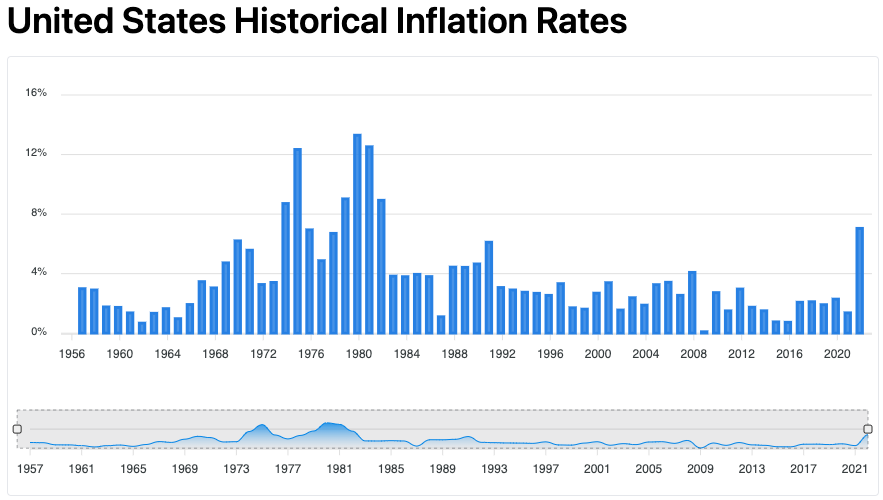
So far, the most successful stablecoins have all pegged themselves to the US dollar. This is easy to see why as USD has the status of being the worlds’ reserve currency and therefore enjoys the main privilege of being the most widely traded currency. Moreover, this is irrespective of the significant devaluation which the USD has experienced since it’s decoupling from the gold standard, with inflation recently surpassing 9% year-on-year.
Given that crypto by its very nature is borderless, the majority of potential users would have already been accustomed to this USD framing when dealing internationally. While pegging to the USD might seem like a no-brainer, the reason behind this deserves more attention.
Aside from a unit-of-account, the biggest draw for maintaining a USD peg is for the stablecoin to capitalise on the existing financial infrastructure and reputation. This is especially the case for fiat-backed stablecoins whereby each dollar represented on chain is backed by an actual US dollar held in a bank account somewhere. For fiat-backed stablecoins such as USDT and USDC, they are able to piggyback on the trust guarantees afforded by USD fiat. This provides a tremendous head start as the assurance that each dollar can be redeemed to its fiat equivalent means that the market dynamics of USDT/USDC is relatively straightforward: Each USDT/USDC is worth the equivalent of 1 USD. Except for trusting the stablecoin issuers to deliver on their obligation to mint/burn equivalent stablecoins as per their fiat reserves, fiat-backed stablecoins do not require any additional trust assumptions to be built.
With that being said, there are non-USD pegged stablecoins which have or are currently being implemented such as the likes of EURT (same company as USDT), EUROC (same company as USDC) or XSGD. Although the current market share of these non-USD alternatives are insignificant, there are a few reasons to believe that the future of crypto will consist of multiple stablecoins pegged to various currencies:
- America had a head start with crypto adoption and was able to set the standard for a niche group of early adopters (many of which would be more educated and financially capable to risking capital).
- As global adoption increases, the untapped demand for digital assets denominated in the user’s local currency would likely increase as the local currency is what users are most accustomed to in their daily lives.
- Increasing adoption within users in the same currency system would increase available liquidity in said currency and kickstart a virtuous cycle.
- There is tremendous national interest to ensure that local governments still retain control over their own monetary systems in a future where such stablecoins become commonplace.
Taking this a step further, certain communities which have gained critical mass might also start foregoing fiat currency pegs completely. Glimpses of this have already started to appear in the last bull run with projects such as TOMB finance which pegs itself to the price of FTM, the underlying blockchain token. Of note, the pegged asset and the mechanics which a protocol uses to achieve said peg are two separate concerns. In other words, a protocol is able to set its target peg independent from how it achieves the set peg.
With regards to stablecoins pegged to different assets, such a future is contingent on the preferences of users as well as the convenience of transacting with such stablecoins. Given that the ecosystem is moving towards greater interoperability, it isn’t hard to imagine users choosing to place their capital in particular stablecoins which suits their specific purposes/beliefs.
Practicality of Decentralisation
Key amongst the ideals of many users in the crypto space is that of decentralisation as a means of escaping from the current system where rules are dictated by people with vested interests. In other words, an alternative economy which offers more equitable access and outcomes. My personal view is that it is accountability not decentralisation which is more critical to achieve this future. Centralisation has the tendency to concentrate power but as long as those in power can be held liable for their actions, most people would rather be able to pursue their own interests while trusting that their daily needs are met by said powers.
Practically speaking, it is in communities with faltering trust in their legal and/or monetary systems where demand for such an alternative economy would bloom. Hence, the most likely future is one whereby there are two distinct but interconnected economies: one governed by the current traditional system (with their CBDCs, fiat collateralisation, etc) and another governed by the decentralized organisations of the future. Of note, the alternative economy will exist irrespective of a government’s wish to censor it due to the core design of cryptos, which is out of the scope of this article.
For countries where the social contract is upheld to a minimum expectation, fiat-backed stablecoins will be sufficient to meet the needs of its citizens as well as businesses. In this case, stablecoins brings with it significant efficiency improvements in terms of settlement and traceability. Institutions will be largely bounded to this fiat-backed stablecoin due to the nature of their legal status. Any requirements above a fiat-backed stablecoin would likely come from retail consumers who are more financially literate and financially able to diversify their net worth.
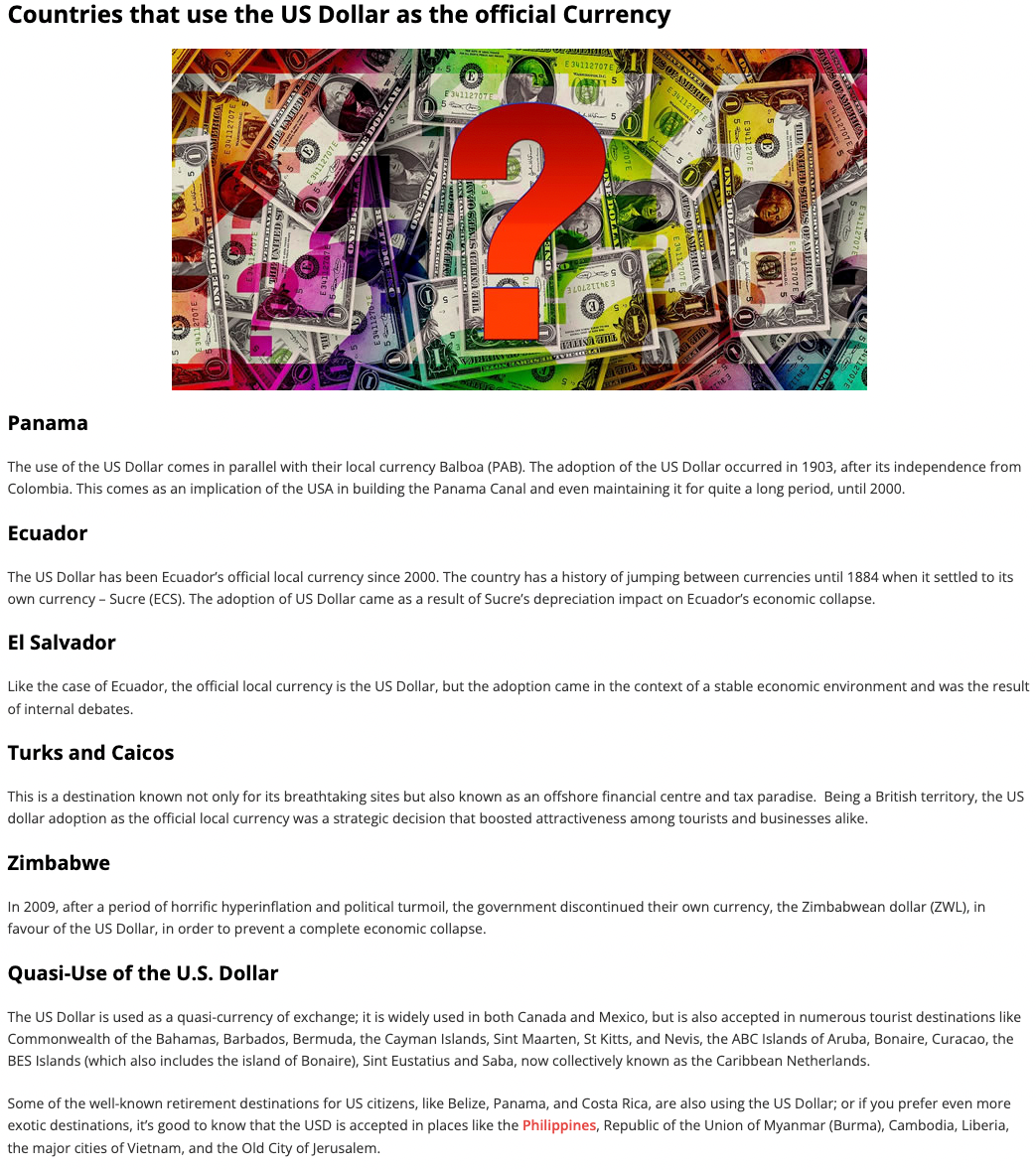
Absent this trust, such communities have two options: adopt a stablecoin backed by a foreign currency or move towards non fiat-backed stablecoins. The corollary for the first is the fact that there are dozens of countries which already officially or unofficially use the US dollar as a medium of exchange. Case in point, it is unsurprising to hear of Sri Lankan residents recently converting their local currency to USDT given the unfortunate collapse of their economy. With the ever-improving ease of digitally transacting consumer focused stablecoins, it won’t be surprising to see more countries join this group as the barriers to entry are significantly lowered. Having covered the above, it begs the question why non fiat-backed stablecoins are even being considered.
Custodians, Credentials, and Censorship
The biggest draw to fiat-backed currencies is also the strongest argument against it. Fiat-backed stablecoins are effective bridges into the traditional system as they still rely on custodians to gate keep trust. For fiat-backed stablecoins, the underlying fiat will still have to be held in a bank account which is ultimately under the jurisdiction of the traditional financial (tradFi) system. As such, fiat-backed stablecoins are still beholden to the same credential-based access where users can be censored based on the actions of their custodians.
Although direct censorship whereby an individual is censored due to their involvement in “undesirable activities” is more easily justifiable, leaving aside who gets to define what is undesirable, this system still indirectly excludes vast swaths of the global population.
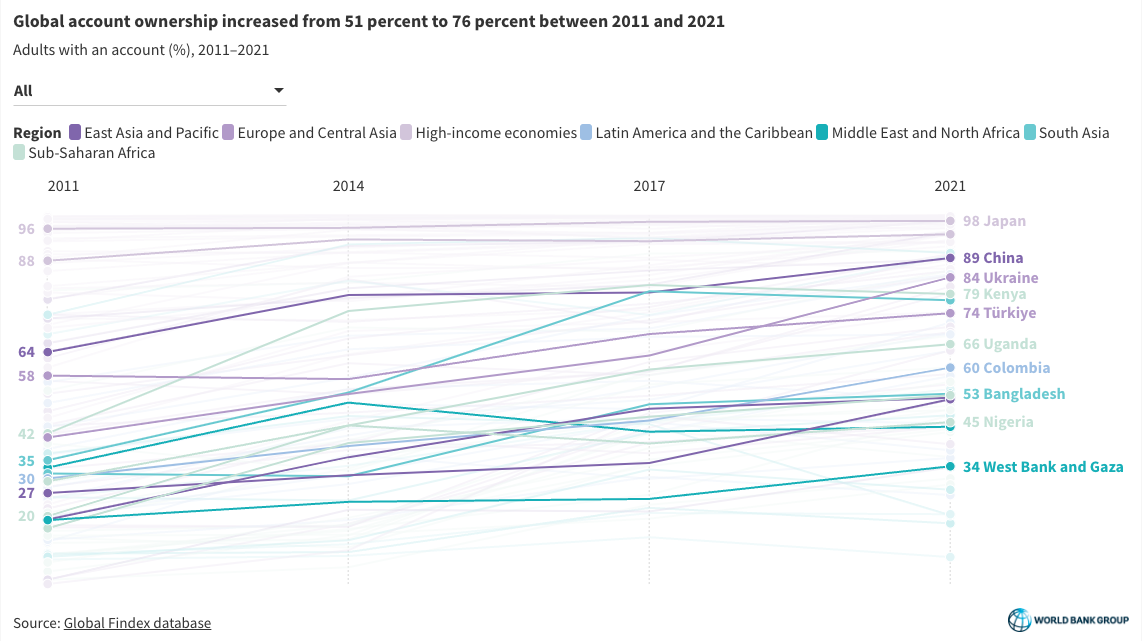
The costs of KYC (Know-Your-Customer) and AML (Anti-Money Laundering) means there is less profit incentive to open and maintain accounts for less wealthy populations. The costs to wire funds from one account to the next, especially internationally, makes such transactions prohibitively expensive for those who are already less able to afford such fees. These will always be an issue as long as the user has to redeem their stablecoin to the underlying fiat.
Aside from censorship arising out of costs, users are also at risks of being excluded based on factors which are not within their control. The most notable of this being the recent SWIFT sanction on Russia where Russian banks were blacklisted from using the global payments messaging system. While the sanction managed to destabilise Russian infrastructure, the citizens experienced much of the collateral damage. Russian citizens were unable to access their life savings due to bank runs nor save whatever remaining liquidity they had by transferring out of the Russian Ruble. All of this personal distress due to decisions made by organisations out of their control.
Depending on the extent which a user wants to or is forced to mitigate this risk, they will need to minimise their exposure to fiat-backed stablecoins.
Foundation For An Alternative Economy (Crypto-backed Stablecoins)
Moving away from fiat-backed stablecoins also means foregoing the trust assumptions which accompanies the fiat system. Consequently, a non-fiat backed stablecoin can choose to utilise trust in existing assets or bootstrap this trust from scratch. As an aside, do note that in the absence of oracles reliably feeding real world data to the chain, such asset-backed stablecoins will be limited to on-chain assets as a matter of security (as the stablecoin can only read on-chain data). With progress, I do expect some form of real-world asset-backed stablecoin to emerge but this particular variant has been left out in favour of simplicity.
The first of such asset-backed stablecoins are those collateralised by crypto assets, that is crypto-backed stablecoins. To understand the core design of such stablecoins, we must first look at how defaults are handled in tradFi. Defaulting on a loan in tradFi entitles the creditor to seek reparations via a claim on the the defaulting party’s remaining/future assets. This is only possible as there is an identity that is permanently tied to the defaulter which is legally enforceable in court.
Without a legal system supporting recourse via credentials, the next best way to ensure security of the stablecoin is to provide the guarantee that the dollar value of the stablecoin is always backed by a dollar of crypto asset(s). This means that there is always a basket of cryptos which underlie the total supply of crypto-backed stablecoins. As the dollar value of the basket increases, the protocol is able to mint more stablecoins however the opposite applies when the price of the basket drops. This is the design behind stablecoins such as DAI.
Given the volatility of cryptos, a certain amount of overcollateralisation will be required in order to minimise depegging risks. This is critical due to the asymmetry of sourcing liquidity during a bear market. During bull markets, it is easy for the protocol to mint more stablecoins as it would be easily absorbed by traders trying to maximise their capital efficiency. To see why this is the case, by collateralising crypto assets with the protocol, a user gains additional liquidity in the form of stablecoins. Hence, crypto-based collateralisation is essentially a form of leverage.
In bear markets, the protocol needs to be able to externally source stablecoins from the market in order burn them. This is usually done by setting up a liquidation market whereby liquidators can identify loans which are at risk of being undercollateralised and trigger the liquidation of that loan in order to earn a profit. The process is transparent with all the loans and liquidations being visible on the chain. In this case, trust in crypto-backed stablecoins is a function of the relative crypto proportions in the underlying collateral basket. Of note, fiat-backed stablecoins are also eligible as collateral.
By relying on other cryptos for trust, crypto-backed stablecoins are able to decouple themselves from traditional censorship. This characteristic alone makes crypto-backed stablecoins a core building block of the alternative economy. Nevertheless, using such a building block comes with one major drawback.
Given the need for overcollateralisation, crypto-backed stablecoins are generally very capital inefficient especially when compared to the above fiat-backed equivalents. The subtlety here is that crypto-backed stablecoins can actually increase the network’s overall liquidity (via leverage) as compared to if it was just held in a wallet. There is a lot of experimentation happening in the stablecoin space to increase the capital efficiency by utilising crypto assets which would otherwise have been locked away. This doesn’t only apply to funds sitting in wallets but also liquidity which is locked up in DeFi protocols (ie AAVE’s recent GHO announcement). This pursuit of efficiency then leads us to the last class of stablecoins, colloquially known as algorithmic stablecoins.
Bootstrapping Trust (Algorithmic Stablecoins — Seignoirage)
Algorithmic stablecoins are probably the most notorious class of stablecoins due to the recent collapse of the Terra ecosystem stablecoin UST. While algorithmic stablecoins stay true to its namesake of creating value out of math, the biggest obstacle facing algorithmic stablecoins is bootstrapping enough trust to support the liquidity demanded of their stablecoin. Even during this crypto-winter, there are still teams working towards a feasible algorithmic stablecoin model as it is the holy grail which solves the stablecoin trilemma of price stability, capital efficiency, and decentralisation. Whether this holy grail can actually be forged remains to be seen but the implications of finding one is enormous.
The first sub-class of algorithmic stablecoins are those that are based on seigniorage. Taken from Investopedia:
Seigniorage is the difference between the face value of money, such as a $10 bill or a quarter coin, and the cost to produce it. In other words, the economic cost of producing a currency within a given economy or country is lower than the actual exchange value, which generally accrues to governments who mint the money.
Seigniorage stablecoins replicates the function of a central bank by minting new stablecoins based on the protocols directives. Absent the authoritative power which central banks have, many seigniorage stablecoins usually rely on the minting/burning of a secondary token directly on the protocol. This token can be bought/sold on the open market and its supply is usually the inverse of the stablecoin.
UST is an example of this design whereby 1 UST was supposedly always redeemable for 1 USD worth of LUNA. If excess demand was pushing UST away from its peg, LUNA holders would be able to burn 1 USD worth of LUNA for 1 UST and pocket the difference. If UST was falling below peg, a UST holder could burn 1 UST to mint 1 USD worth of LUNA and pocket the difference. Of course this failed spectacularly when social contagion caused LUNA to spiral down to zero and in the process destroying any trust in its ecosystem. Even up to this point, LUNAC (the rebranded LUNA) still performs the same exact functions and generates cash flows in a similar manner as before the crash but what changed was the community’s perspective of it.
The story of UST highlights again the important fact that value is collectively determined by the community. Given that non-fiat backed stablecoins are currently purely on-chain constructs, such stablecoins have an extremely difficult burden of proving its effectiveness as they are stuck in a catch-22 situation. The protocol requires deep enough liquidity such that a large trade won’t cause significant deviations but users are only willing to provide liquidity on the basis that the protocol have proven itself to be able to withstand such trades. We can only speculate on what-ifs, but it is interesting to think of what could have been the future if UST had just had 3–5x the liquidity.
Rethinking Token Supply Entirely (Algorithmic Stablecoins — Rebasing)
The last group of stablecoins (some refer to them as pseudo-stablecoins) takes advantage of the unique properties of blockchain to completely flip the traditional mental model of money supply on its head. It experiments with the following question: what if we were able to dynamically control the total supply of a stablecoin by iterating a users balance daily based on their pro rata ownership of network value. This is a completely new paradigm because prior to the blockchain, there was no publicly verifiable nor practical way to remove money from circulation without the central bank equivalent having to reacquire it from the external markets.
Rebasing stablecoins function by taking a snapshot of the total demand for the stablecoin at fixed intervals and adjusting the supply of the stablecoin based on the calculated demand. This is the direction taken by the AMPL stablecoin whereby if the demand for AMPL pushes the price of AMPL above its peg, the supply of AMPL will increase and vice versa. Of note, AMPL’s peg is against the 2019 USD value in order to avoid the inflation which the USD is subjected to. Another notable protocol using a variant of this rebasing model is OHM which I highly recommend checking out if this interests you.
Due to this design, a novel outcome is that holders of the rebasing stablecoin will see their balances change at fixed intervals which is a completely new mental model when it comes to value accounting. Instead of buying a fixed amount of tokens representing a proportional claim of the network value, rebasing stablecoin buyers are purchasing a proportional claim of the network value which is tied to their wallets at the point of purchase and represented in stablecoin units.
Rebasing stablecoins are therefore generally non-dilutive whereby the percentage of the network value which a stablecoin holder owns is not affected by the absolute market cap. Consequently, early adopters stand to benefit the most as each subsequent unit of value which a user buys comes at an increasing cost. The dynamics here is similar to a VC investing in the early stages for equity in a company.
As such, rebasing stablecoins present a very unique proposition whereby it is completely decoupled from tradFi via its fixed peg while not depending on any external assets to generate trust/value. Rebasing stablecoins are not plagued with the same issue of bootstrapping liquidity in order to reduce the cost of maintaining the peg. Instead, the biggest obstacle it faces is educating its users as to why their wallet balances can dynamically change especially when this balance is decreasing.
Towards a Multi-Stablecoin Future
Having covered the different classes of stablecoins, it is easy to see why the future will likely be one where multiple stablecoins thrive. Each implementation caters to the specific need of their own community while increasing chain/token interoperability minimizes the friction of moving value between different communities. This is not to say that the market will be equally split between different stablecoins.
At the top of the food chain will be fiat-backed stablecoins which will gain market share due to the historical precedent set by tradFi which has significantly more power to push through such an agenda. One interesting thing to note is that if a central bank ever moves towards minting consumer-focused CBDCs on chain, the need for such fiat-backed stablecoins are essentially nullified.
After fiat-backed stablecoins, it is a toss-up between crypto-backed and seigniorage stablecoins. Prior to the Terra crash, UST was able to overtake DAI in terms of market cap due to the increased capital efficiency. Given the short memory of markets, it is possible that another seigniorage stablecoin manages to improve upon the model and bootstrap more liquidity in order to minimize the downside risks. Although both types of stablecoins cater towards users diversifying away from the traditional economy, crypto-backed stablecoins would be the less risky option given it does not rely on a single asset for its trust assumptions.
Rebasing stablecoins will dominate where there is a strong need for a stable unit of accounting but will unlikely be adopted by consumers given how different and unintuitive the mechanics are for the average user. Rebasing stablecoins will likely operate behind the scenes for the average user but still bring tremendous value when it comes to correctly pricing an end product.
More likely than not, littered across this value chain will be hybrid stablecoins which aim to combine the best of each stablecoin type. For example, a protocol might choose to have a seigniorage mechanism whose base trust assumption relies on some form of crypto/fiat collateralisation. The modularity of web3 bodes well for the future of stablecoins as users will no longer be arbitrarily forced into a particular monetary system. Such opportunities might seem trivial for the average user now but it will be priceless if and when they are suddenly forced to choose.
Also in this stablecoin series: Decentralized Exchanges (DEX): Supercharging Stablecoin Diversity and Stablesats: Are Perpetual Inverse Swaps The Next Stablecoin?