Money is only as useful as what it enables you to do. Money would have no value if it couldn’t be exchanged for something that actually brought a meaningful change in our lives. Stablecoins, as one form of money, are also held to the same fundamental rules and therefore the utility of a stablecoin will be closely tied to its function as a medium-of-exchange. The store-of-value and unit-of-account functionalities of stablecoins have been covered in an earlier article where we explored macro factors which would drive the future of stablecoins. This article builds upon the foundations set by stablecoins by focusing on the role of DEXes in driving this multi-stablecoin future.
Stablecoin Trade Dominance
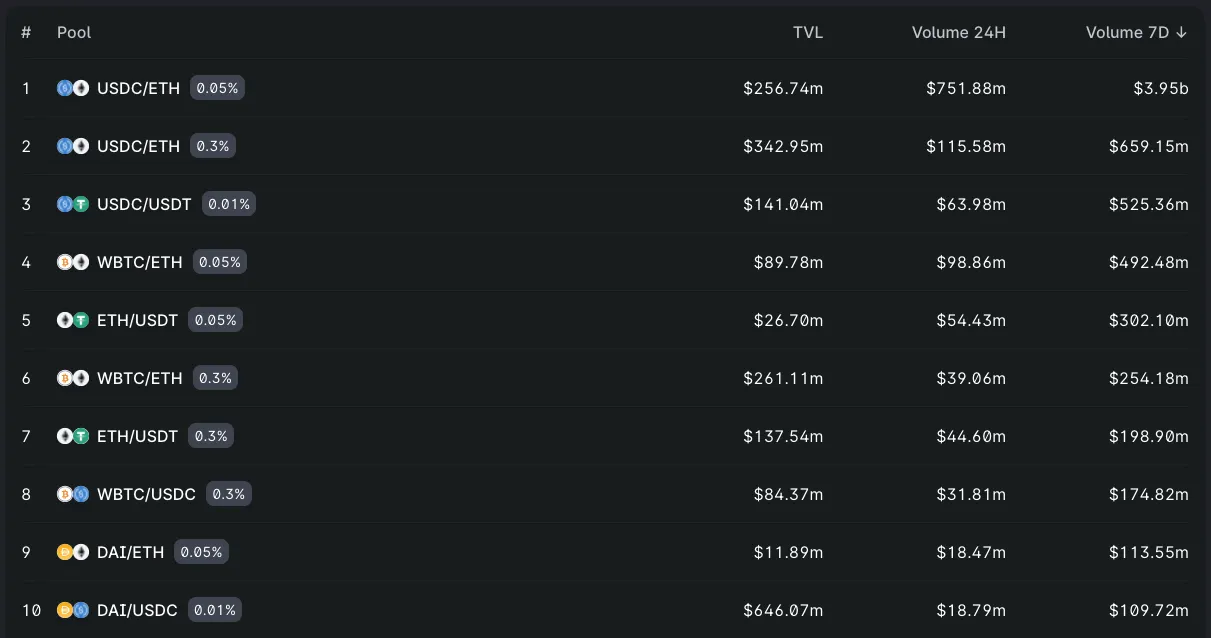
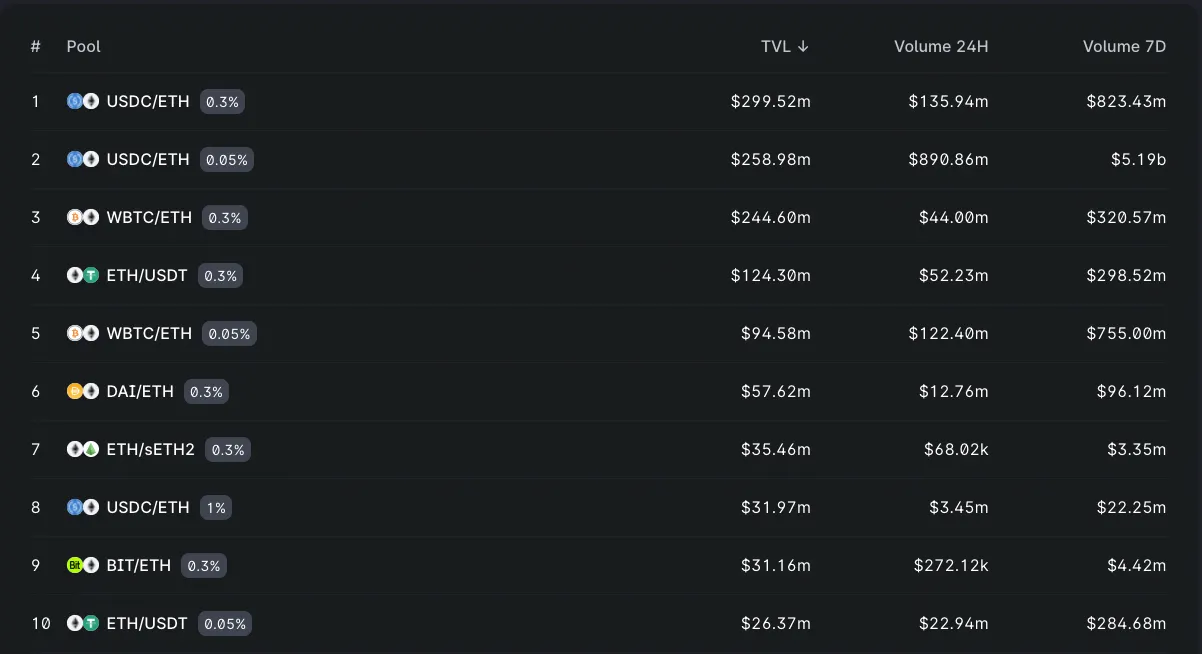
A quick look at the top trading pairs on Uniswap, the most dominant DEX, highlights the key role that stablecoins will continue to play in the overall crypto ecosystem. Out of the top 10 traded pairs, non-stablecoin pairs only took the 4th and 6th spot for WBTC (wrapped Bitcoin to transact on Ethereum) and ETH swaps. A quick glance on a centralised exchange (CEX) like Binance will corroborate this even further with all the top trading pairs consisting of a stablecoin.
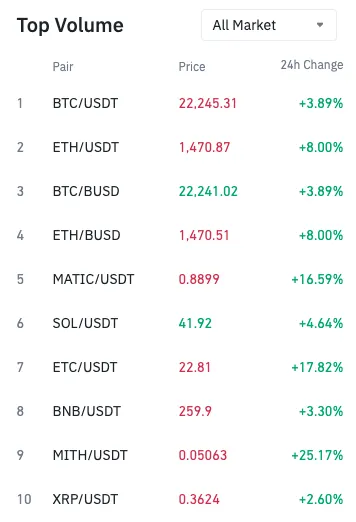
What this implies is that there is a very strong demand for trades denominated in USD. This USD dominance is unlikely to last as I covered earlier but the fact still remains that users have shown a distinct preference for currency denominated stablecoins. Crucially, this demand surfaces in two distinct ways:
- Stablecoin to token/coin swaps (stable-token swaps)
- Stablecoin to stablecoin swaps (stable-stable swaps)
For reasons which we will get into shortly, the latter will be in much higher demand on DEXes as compared to CEXes. Of note, stable-stable swaps can actually be broken down further as the stablecoins in question need not have the same currency peg. Practically speaking, any swaps involving stablecoins with different pegs will function similar to stable-token swaps. As such, this article treats stable-stable swaps as exchanges between stablecoins pegged to the same currency. This is crucial to call out as the market dynamics differs vastly between the two types.
From the perspective of a user, stable-token swaps are about redeeming the value of the stablecoin while stable-stable swaps are about accessing different store-of-value or medium-of-exchange characteristics of the stablecoin. The ability to conveniently exchange one stablecoin for another will effectively nullify the need to hold a specific stablecoin as a medium-of-exchange. This is further amplified by the fact that DEXes enable swaps to be infinitely combined as part of a single transaction. All the stablecoin user had to do was pay a small convenience fee to the DEX and liquidity providers (LP) without ever having to know about the intermediate stablecoin hops.
To drive this point home, imagine being in Singapore and purchasing an item from a European seller. Traditionally, you would have had to first agree on an invoice currency (unit-of-account) with the supplier which was most likely defaulted to USD. As a Singaporean who does business in SGD, you would then have to convert your SGD to USD prior to sending the corresponding USD amount over to the seller. The seller would have received the USD payment but will then be required to convert it to EUR in order to pay for their operations. For both you and the seller, the only reason why USD was held temporarily was as a medium-of-exchange. Of course with sufficient liquidity, SGD could be exchanged directly for EUR but either party still takes on the temporary risk of holding a foreign currency.
While you could pay a bank a hefty fee to hide all the above complexity, this just shifts the exchange risks to the bank. Crucially, this has yet to take into account the time required to process the payment which would be dependent on different payment rails for each currency. DEXes enable near-instant finality while significantly limiting time-based exchange risks. All of this without having to get an intermediary involved. Taking the same scenario above and assuming the goods have a fungible token representation, as a Singaporean buyer, I only see the XSGD in my wallet being exchanged directly for the token. For a seller, the token would have been placed on the DEX and effectively sold for TEUR. Throughout this whole process, neither party had to do any currency calculations as the transaction was finalised based on the stablecoin which they are most comfortable with.
This article won’t go into depth on the mechanics of how a DEX is implemented but rather focus on the implications of having such a mechanism in place when coupled with the presence of stablecoins. Nevertheless, for the curious, you can find out how such instantaneous liquidity is enabled via a non-technical primer or the amazing video explainer by Whiteboard Crypto below. Do note, Automated Market Maker (AMM) is the underlying mechanism powering most major DEXes.
Liquidity: Minimizing Slippage, Maximizing Availability
Such seamless transfer of value is enabled via the availability of instantaneous liquidity. In the DeFi space, this is synonymous with the presence of liquidity pools managed by the various DEXes. Tokens which form trading pairs are accumulated into a pool which a user can then swap against for a small fee. Of note, swaps against these liquidity pools can also be done by other smart contracts which then allows the chaining of transactions which was hinted to earlier. The result of this is a permissionless transaction that can be composed of an infinite number of smaller swaps. This capability is amplified further with the presence of aggregators (ie 1INCH) which help to route swaps between different DEXes as well.
With swaps being so easily redirected, DEXes will be forced to compete based on two factors tightly linked to liquidity: slippage and availability. Crucially, with all else being equal, it must be noted that liquidity tends to naturally gravitate towards more liquidity. Larger pools of liquidity will tend to attract more liquidity as it benefits both the trader and the LP. Higher liquidity means less slippage per trade which in turn means more trades and resulting trading fees.
Stable-Stable Swaps: Stamping Out Slippage
For stablecoins pegged to the same currency, this liquidity will likely accumulate on DEXes which have been optimised for stable trading pairs (ie Curve with their stableswaps or Uniswap with their 0.01% pools). The trading curves (mathematical curves used to determine exchange rate) used by these DEXes are meant to minimise fees and slippage for more correlated assets while significantly increasing liquidity utilisation of the pool.
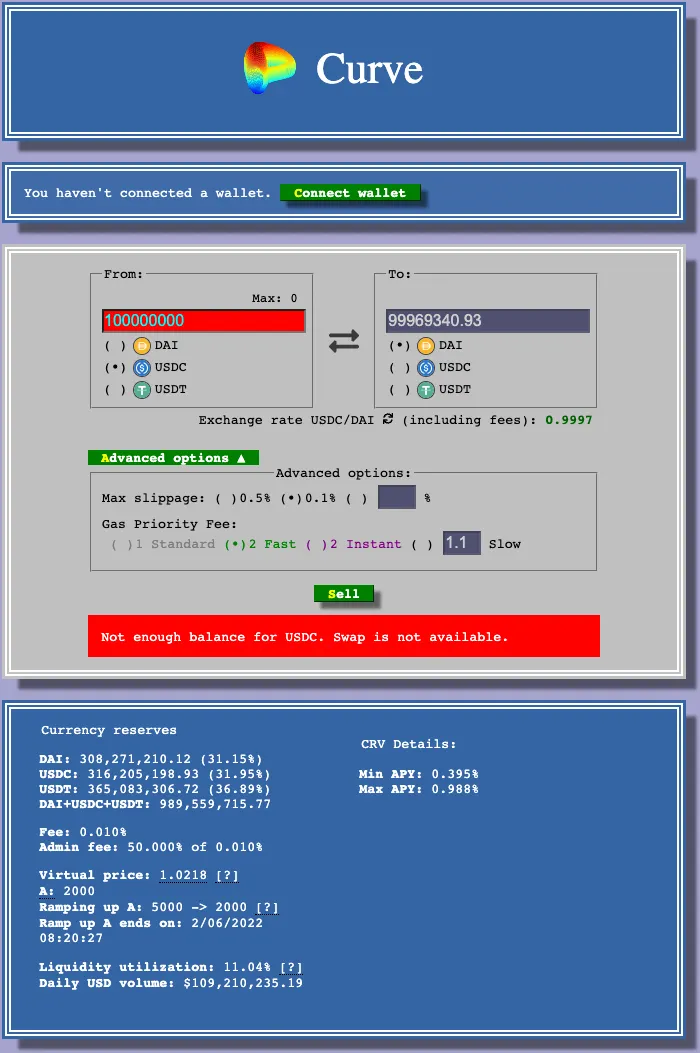
In the example below, a user swapping 100,000,000USDC can expect to receive ~99,969,340DAI. This is an expected slippage of ~0.03% on a 100M USD trade inclusive of fees fixed at 0.01% of trade value! Of note, this is when the total pool liquidity is only ~1B as can be seen in the screenshot below.
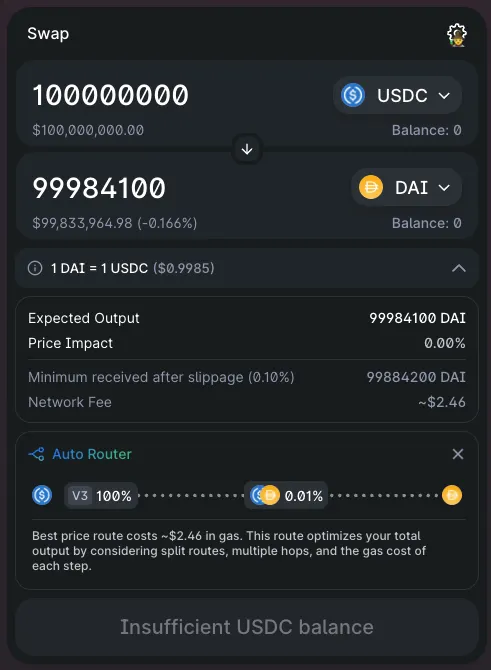
For comparison, a similar trade on UniSwap will result in an expected 99,984,100DAI which only emphasises the depth of liquidity that such DEXes enable.
Stable-stable liquidity will come from two places, public money (ie government) or private money (ie individuals and institutions). Assuming adoption of stablecoins by governments, central banks would likely want to provide sufficient local currency reserves to support external trades against their local economy. Of note, these stablecoins will have to be fiat-backed given that it is public in nature. Governments will likely be forced to adopt some form of locally pegged stablecoin (due to objectively better technology) else risk indirectly handing power over to private entities in the process.
Private liquidity will naturally have a more profit-driven agenda and are therefore more likely to adopt crypto-backed or algorithmic stablecoins if it suits their agenda. As much as governments might try to prohibit use of locally pegged stablecoins which have yet to be endorsed, the sheer size of the economy will likely result in at least one stablecoin alternative being adopted. In the absence of such liquidity, citizens might choose to just use the stablecoin of a foreign country. This has the additional disadvantage of foregoing any form of value capture which would have then taken place if the trade was routed via their own stablecoin (ie fees or indirectly through creation of additional trading pairs).
Crucially, DEX liquidity is still split between different protocols as there are other considerations involved when providing liquidity. For example, if LPs only wanted exposure to DAI & USDC but not USDT, they would have to settle for the UniSwap USDC/DAI pool. There are also indirect incentives such as the provision of additional CRV tokens to LPs on the Curve pools. The result of all this competition is that the market for stable-stable swaps is likely to be an oligopoly of major DEXes through which all swaps are routed to.
With increasing adoption, these pools are expected to grow and therefore slippage will likely become inconsequential for the large majority of trades. As such, similarly pegged stablecoins will be defined by:
- Store-of-value properties since unit-of-account functionality is negated while medium-of-exchange requirements are superseded by DEX convenience.
- Resistance to arbitrary censorship. This includes being censored due to a government’s definition of what constitutes “undesirable activities” or indirectly being censored due to factors outside one’s control. Covered in greater detail in an earlier article.
- Ability to be redeemed for various goods. This ranges the whole span from daily necessities (food, eletricity, etc) to other financial assets (equities, crypto-tokens, etc).
The first 2 points are intrinsic to a stablecoin’s design and have been covered in an earlier article. It is the last point which is of interest when it comes to the role of DEXes.
Stable-Token Swaps: Extending Availability
Going back to the key role of stablecoins as a form of money, it bears repeating that money is only as useful as what it enables you to do. Stable-stable swaps do not make a meaningful difference to our lives as all the value movement remains abstracted and relative valuations do not change given the same peg. The value locked in the stablecoin is only useful if it can be redeemed and this is where stable-token swaps come in.
How this demand is translated to DEXes is in the ability of a trader to easily access the assets which they want to buy. Crucially, with a key characteristic of liquidity being that it attracts more liquidity, this availability of assets will scale roughly in proportion to the total liquidity on the DEX. From the perspective of a stablecoin, the larger the user base, the higher the likelihood that a trading pair will be created against another token. When combined, this means that DEXes will function as a marketplace whereby communities can come to trade based on their preferred stablecoins.
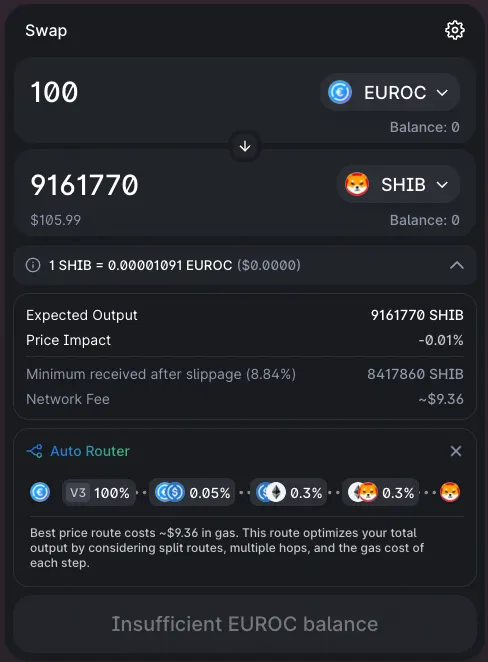
A result of the above forces is that trading pairs for the most exotic assets will likely utilise dominant stablecoins as its base. As such, in order to access these more exotic trades, a holder of a smaller stablecoin will likely have to go through a virtualised intermediate hop via the more liquid stablecoin. For example, if I wanted to swap EUROC for SHIB, my transaction will have to be routed via EUROC to USDC and then USDC to SHIB. Note that, all of this happens in the background for a DEX user, the only impact which a user experiences is the increased fees and slippage due to the multiple hops.
This brings us to the key dynamics at play in the stable-token market:
- Every stable-token pool has varying liquidity depth which results in a corresponding slippage amount
- Every stable-token pool also has its own fee tier
- Every DEX swap requires gas fees in order to be processed by the network
- A stable-token swap is able to be routed via an infinite amount of hops in order to achieve the final stable to token trade
As can be seen from the example above, DEXes implement this “Auto Router” function as a form of value-add to the trader. In this case, UniSwap has decided to route the trade via an additional ETH hop between USDC and SHIB. This is done even though there is a more direct route via SHIB/USDC pool.
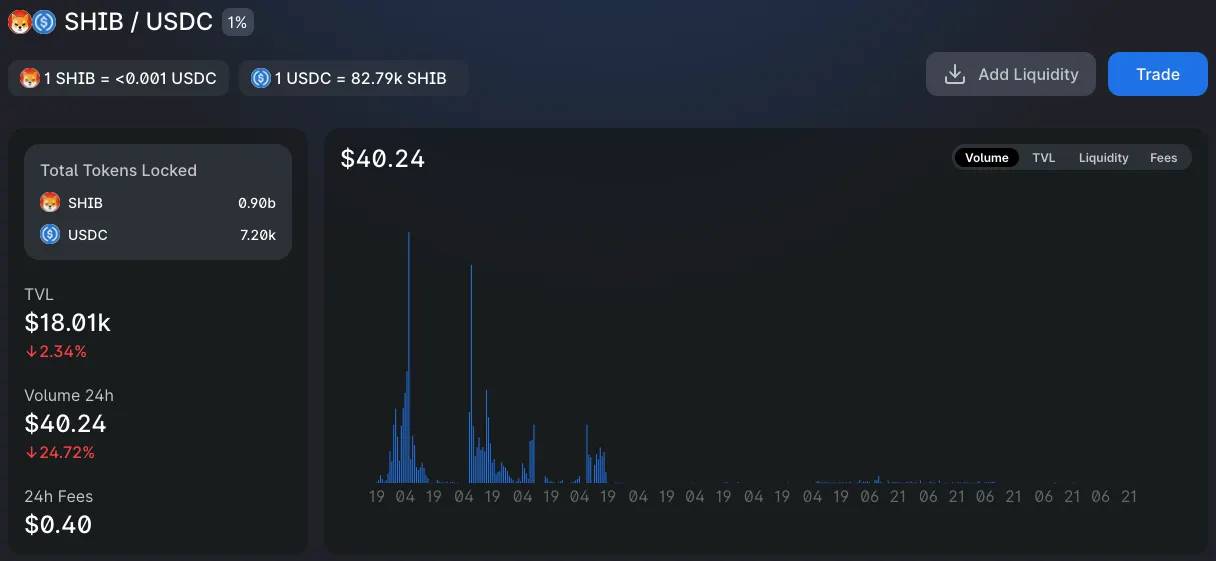
UniSwap has determined that the savings for the additional ETH hop is greater than the slippage and fees which the trader would incur trading against the SHIB/USDC pool. Critically, this routing actually takes value away from SHIB/USDC LPs as they miss out on the trading fees. However, the protocol leaves it up to the LP to decide how they would prefer to allocate their liquidity as this could be due to a multitude of factors: exposure to pool tokens, impermanent loss risks, etc. Lower fees for the trader will encourage higher trading volume which ultimately benefits the protocol, the LP, and the trader. Of note, this routing functionality could also be implemented by a third-party aggregator such as 1INCH.
The cumulative effect of all the above is that majority of DEX swaps will be routed via the most liquid pools which tend to have a stablecoin half. The most liquid pools are those where the market has struck a balance between trader fees and LP risk/rewards. More exotic swaps might result in a hop between non-stablecoin pairs but with increasing adoption, it is expected that a viable stablecoin pair will emerge. This is predicated on the assumption that the general user will always find it more intuitive to trade based on a stablecoin that is pegged to their local currency.
Such organic growth of liquidity pools across various DEXes will inevitably lead to a future where a user could practically obtain any fungible token instantaneously. This seamless flow of value will be powered by the modularity of the underlying tech.
Supercharging A Multi-Stablecoin Future
A look at the top trading pairs on UniSwap now provides a glimpse into the future of stablecoins whereby even for a single asset, there will likely be multiple pools each with a different stablecoin as its base. Furthermore, this also applies to similarly pegged stablecoins as can be seen from the top pools for ETH which consists of trading pairs with all the major USD pegged stablecoins: USDC, USDT, DAI.
As long as a community continues to rally behind a stablecoin, there will likely be trading pairs created on the DEXes. Consequently, trading costs will gradually be lowered as it moves inverse to DEX liquidity growth. Aside from diversification purposes, users will have less reasons to hold another stablecoin given that the cost and availability of a trade becomes less significant considerations.
Of course, given the significant national interest in ensuring the survival of the national stablecoin/CBDC equivalent, users will still be forced to use such coins to a certain extent. DEXes might be able to ease this requirement by providing a cheap and easy-to-use middle layer when such a requirement arises. For all other on-chain purposes, users will be able to select the chain which they believe will best serve their individual interest. No being forced into a particular monetary system due to circumstances outside their control. This is ultimately the future that is being built: one where there is more equitable access and outcomes for all.
Thanks for staying till the end. Would love to hear your thought/comments so do drop a comment. I’m active on twitter *@*AwKaiShin if you would like to receive more digestible tidbits of crypto-related info or visit my personal website if you would like my services :)
Stablecoin Series:
- The Future of Stablecoins: A Macro Lens
- Decentralized Exchanges (DEX): Supercharging Stablecoin Diversity
- Stablesats: Are Perpetual Inverse Swaps The Next Stablecoin?