Galoy, the company behind El Salvador’s open-sourced Bitcoin Beach Wallet, has just announced the introduction of Stablesats which are effectively BTC-backed US dollars. For those unfamiliar, the Bitcoin Beach Wallet is currently being piloted in El Zonte, one of El Salvador’s villages, to create a BTC economy where BTC can be used for daily transactions. Given this context, the launch of Stablesats is particularly interesting as it creates a stable dollar via a derivatives market fully collateralized by BTC (ie. no exposure to fiat).
The derivative market powering Stablesats trades on what are called Perpetual Inverse Swaps. This is a very loaded term so let’s unpack it bit-by-bit to understand the forces which are supposed to keep this BTC backed dollar stable.
What is a Perpetual Swap?
Derivatives
Perpetuals swaps, sometimes referred to as perps, are one of the more complex types of financial derivatives. A derivative is a financial contract which parties enter into that derive their value from an underlying asset. There are many reasons to do so but for our purposes, such a derivative enables the fluctuation risks of the underlying asset to instead be sold off to speculators in the derivative markets. That is, those that only want a fixed value of the underlying asset sells their potential profit/loses arising from fluctuations to other market participants.
Futures
Underlying this solution is a fundamental problem of pricing in the uncertainty of time. As such, the base derivative that inverse perpetuals built on top of are futures. Futures are a legal contract between parties to buy and sell an asset at a predetermined price at a specified time in the future.

There are 2 key considerations when entering into a futures contract:
- The price at which the contract will be settled upon expiry
- The date of expiry
The benefit of a futures contract should now become more apparent as by setting the above 2 in stone, certain parties to the agreement gets a guarantee that they will be able to trade the underlying asset at a fixed price on a given date.
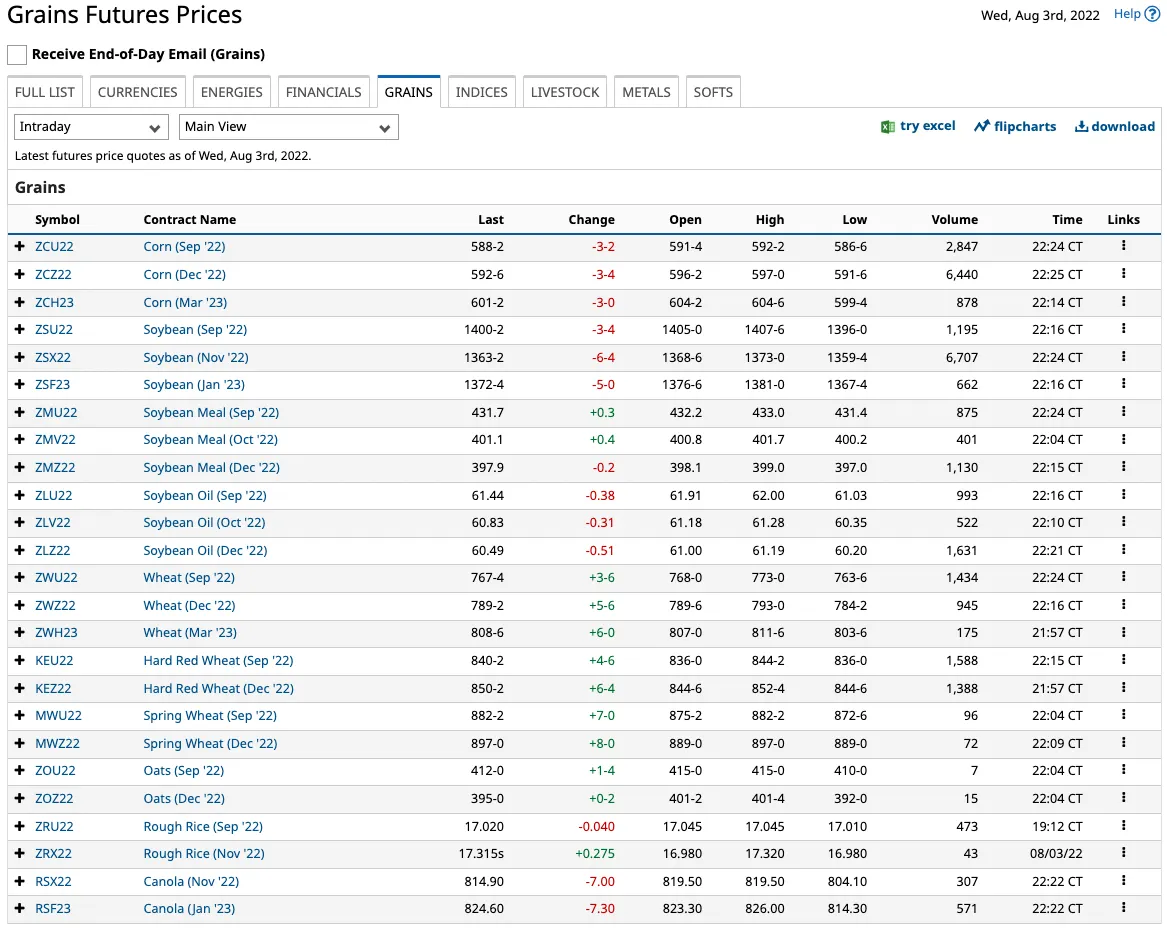
This is most intuitive when looking at an agricultural industry such as grains. As a grain farmer, in order to grow grains, there are multiple costs which the farmer will have to incur upfront before my grains are ready to be sold. This includes:
- Sourcing the seeds
- Irrigating the soil
- Planting the seeds
- Growing the crop (water, fertiliser, pesticides, etc.)
- Harvesting the grains
- Processing the grains
All the above might take up to a few months with farmers not seeing a single dollar for their grains until the the first grain is sold. Moreover, the price of grain then might vary significantly from when the grains were first planted. As such, to minimise such risks, the farmer might decide to enter into a futures contract where the buyer agrees to purchase all the grains at a fixed price in the future when the grains are ready to be sold. The farmer gets a guaranteed future price while the buyer stands to profit/lose depending on the difference between the futures and market price at the point of the contract expiring.
Perpetuals
Based on the above definitions, perpetuals are essentially futures with no expiration date. This is made possible in the crypto space due to the nature of the asset class which is digital and therefore not susceptible to any degradation due to time. Perpetuals are one of the most liquid products in Bitcoin as it is designed to mimic the spot market while offering access to cheap leverage. In order to achieve this, there are a few concepts unique to perpetuals:
- Requirement for a price peg to ensure perpetuals are trading close to or equal to the spot market price
- An open interest which is the number of futures contracts which have yet to be closed by their holders
- A funding premium which is paid by the contract buyer/seller to align the contract price with the spot market. The premium is the difference between the price of the perpetual vs the weighted average of all major spot exchanges
- Introduction of an initial and maintenance margin for those trading on leverage. The initial margin is the minimum value that needs to be paid in order to open a leveraged position and therefore acts as collateral. The maintenance margin is the minimum amount of collateral required in order to keep the position open.
- A liquidation mechanism which sends a forced order into the market when the open position is no longer sufficiently covered by the collateral.
Due to the capital efficiency which perpetuals enable, perpetuals play a significant role in BTC price discovery as it materialises the future value of BTC which a significant section of the market is already trading on.
Inverse Perpetuals
The “inverse” when applied to perpetuals refers to the base denomination of the perpetual. A BTC perpetual will be denominated in BTC with profit/loss being priced in fiat however a BTC inverse perpetual will be denominated in fiat with any profit/loss being priced in BTC. Taken in another way: a BTC inverse perpetual exchanges dollars based on the price of bitcoin per dollar rather than exchanging BTC based on the dollar price per BTC.
This reframing takes some getting used to as we are all used to thinking in terms of fiat. In essence, the inverse perpetual mechanism used by Stablesats results in synthetic US dollars which are 100% backed by BTC. Crucially, this is all achieved on a single chain without the need to be exposed to any other fiat or cryptos.
What are the risks?
The inverse perpetual swaps mechanism depends on the availability of a liquid market for the perpetuals. Without sufficient liquidity, forced liquidations can cascade resulting in a significant deviation between perpetual price and the index. As liquidations are forced rather than informed, it is expected that the market will cause the perpetual to revert to the index in the long term.
For deviations which extend over a longer period of time, Stableswap has sidestepped this scenario by mentioning on their website that:
“Historically there has been on average more longs than shorts on derivatives exchanges. In this environment, funding is revenue-generating for short positions. This might not stay true in the future.”
Whether this is a fair assumption to make depends on the role which you see BTC playing in the future. This assumption relies on BTC continuing to command a certain level of trust amongst the community in the future. Of note, value is fundamentally subjective so all systems will be required to make or source trust assumptions. For Stablesats, they have decided to source this trust from the BTC network.
Other risks which were acknowledged on their website were the counterparty risks whereby collateral may be unrecoverable if the exchange through which such swaps are being conducted goes under.
Driving the future of BTC?
Stablesats is definitely an interesting initiative as there are synergies to be had once rolled out to the Bitcoin Beach Wallet which are already being used by actual users. While experimenting with new fiat technologies on those who are less financially-able to weather the risks definitely brings with it ethical questions, the implications if it succeeds here are enormous.
The inverse perpetual swap mechanism promises to significantly increase capital efficiency while still being fully collateralised by BTC. Moreover, there are no other tokens involved in the process other than sats which use a single payment rail: Bitcoin. Stablesats effectively uses BTC as a store-of-value and medium-of-exchange with USD as the unit-of-account. How far this goes will inform not only the future of BTC but also that of stablecoins. Given that the code for Stableswap is open-sourced, it is more than likely that this design will continue to see plenty of iterations.
Thanks for staying till the end. Would love to hear your thought/comments so do drop a comment. I’m active on twitter *@*AwKaiShin if you would like to receive more digestible tidbits of crypto-related info or visit my personal website if you would like my services :)
Useful resources
Video explainer on perpetual swaps:
If you’re interested in the future of stablecoins: