For those unfamiliar, Project Guardian is the Monetary Authority of Singapore’s (MAS) initiative to “explore the economic potential and value-adding use cases of asset tokenisation”. What is of particular interest is their first industry pilot of integrating traditional finance (tradFi) with decentralised finance (DeFi) in the wholesale funding markets via the creation of “permissioned liquidity pool” and trust anchors:
3c) Trust anchors — Establish a trusted environment for the execution of DeFi protocols through a common trust layer of independent trust anchors. Trust anchors are regulated financial institutions that screen, verify and issue verifiable credentials to entities that wish to participate in DeFi protocols. This ensures that participants trade only with verified counterparties, issuers and protocol developers.
This approach is unsurprising given that tradFi is built on the foundation of credential based access which is supported by the ability of the legal system to enforce trust. Nevertheless, this customer due diligence (CDD) approach is fundamentally at odds with DeFi’s underlying mantra which is full financial autonomy made possible through trusting code alone. Currently, absent the establishment of viable self-sovereign identity mechanisms (i.e. Soulbound Tokens as proposed by Weyl, Ohlhaver, Buterin), any identity based access would require the presence of a trusted middlemen in order to verify the participants.
What this article attempts to explore is the viability of this CeDeFi approach of inserting a trusted layer into the DeFi stack such that credentials are the first barrier to clear prior to trading. Will adopting just the DeFi mechanics without the spirit of DeFi result in greater economic inclusion? If so, what will be the role of DeFi in such a future?
For a separate analysis on MAS other projects:
Disclaimer: I am in no way affiliated to the project and views here are completely my own. I have previously worked with the DBS team which is currently leading Project Guardian but did not work on the project directly. I have since left the tradFi space in order to dedicate myself completely to the crypto & DeFi space. While this naturally means I am more bullish on DeFi, my goal is always to maintain an objective stance and build towards the more inclusive solution. To this end, any feedback or collaborations are welcomed.
Primer on DeFi Concepts: Pseudonymity — Permissionless Accessibility
I have previously covered the differences between tradFi and DeFi in an earlier article and have linked it here for your reference:
An understanding of DeFi concepts will help, but is not necessary, to be able to follow the broad topics covered. For our purposes, the main thing to take note of is that all DeFi mechanics, including liquidity pools which is what Project Guardian’s pilot is experimenting with, is built upon a foundation of pseudonymity which is defined as:
Without diving into the technical details, this pseudonymity is made possible due to the design of the underlying technology stack which the DeFi protocol runs on.
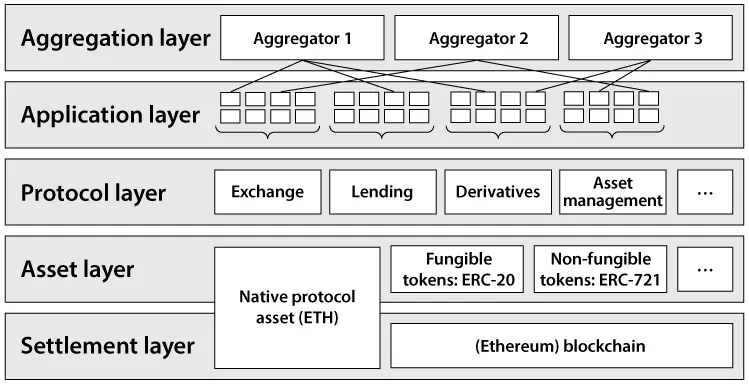
What this pseudonymity means is that, by default, such DeFi protocols can be used by anyone as the barriers to entry as well as the censorship risks are greatly diminished. It is important to note that psuedonymity is not equivalent to being completely anonymous as the pseudonyms can still be tied back to a shared identity. Crucially, in the context of DeFi, such pseudonymity is accompanied by increased transparency as every transaction is recorded on the public blockchain which is viewable to all. This greatly diminishes the case for illicit activities in the DeFi space.
Customer Due Diligence: TradFi Bedrock

Participation in the tradFi space is contingent upon first being identified which stands in complete contrast to the pseudonymity afforded by DeFi. The need for CDD on an ongoing basis is built on the premise of market integrity, whereby participants in the tradFi system can have the confidence that by transacting via these financial institutions (FI), they will reduce the likelihood of supporting illicit activities. As such, FIs act as the gatekeeper to the tradFi space where only those who passed the FIs criteria are allowed to access the financial services offered.
Even for those that have passed these gates, their identity serves as a critical piece linking the person to any future debt or obligations resulting from agreement to any legally enforceable contracts which the person has entered into. That is, as a FI lender, I can fallback on bankruptcy proceedings to recover some of my funds even if the borrower does not have sufficient funds (i.e. claim on estate or future earnings). As such, financially speaking, the flip side of having CDD in place is the ability to enter into uncollateralised lending contracts. From the perspective of the borrower, such identity also enables the building of a personal brand via credit scoring.
Given this background, CDD is all about relationships and the corresponding trust underlying such relationships:
- Trust that you are not dealing with those involved in illicit activities
- Trust that parties will make good on their contractual obligations
- Trust that FIs serves the best interest of clients by efficiently allocating financial resources, providing equitable financing opportunities, and managing risks responsibly
The last point is a whole other can of worms but safe to say, the history of tradFi is one which is based on relationships and trust. As such, tradFi’s business model is consequently also dependent on these relationships. This has proven to be an extremely successful model given high level estimates that ~24% of the world economy is made up of the financial services sector. Not bad for an industry which deals with abstract numbers and value transfers.
Consequently, it is only expected that tradFi will approach DeFi through such a lens whereby FIs are still positioned as the trusted intermediaries ensuring consumer protection and safety. This view is not without merit but the need for CDD might unintentionally restrict access to financial services which goes against the goal of financial accessibility and inclusion. While DeFi allows for more equitable access, this also means that users are willing to take full responsibility over their own funds. Absent a breakdown of trust, the average user will still be more comfortable interacting with FIs as that is what they are used to.
In the Singapore context, trust in the financial and legal systems are relatively high and as such, other countries looking to this model for inspiration should first also meet such criteria. Notably missing from the Project Guardian brief is the mention of cryptocurrencies or retail use cases that are being explored. Hence, even if tradFi enters the DeFi space, only FIs and other accredited institutions will be able to access such CeDeFi services. This implies that MAS still views the DeFi space as too risky for the average user even with the supervision of FIs.
Liquidity Pool Summarised: DeFi Market Incentives
The above is an amazing explainer on the mechanics of liquidity pools, which is what Project Guardian intends to utilise. In short, liquidity pools are essentially a pool of tokens held by a smart contract which users can directly trade against. By trading against a liquidity pool, the ratio of tokens in the pool changes which causes the relative valuations of the tokens in the pool to diverge based on a preset mathematical curve. Arbitrageurs will then trade against the pool in order to equalise the pool with the spot rate.
**In the DeFi space, anyone with a crypto wallet can interact with the liquidity pools and even create their own trading pairs. **As long as a token meets the ERC20 standard, users are free to provide liquidity to a pool in order to benefit from the trading fees charged by the protocol. These fees are paid by the traders as a way to compensate the liquidity provider (LP) and protocol for accessing this instantaneous liquidity. Notably absent from this interaction is the presence of a traditional market maker and hence why the liquidity pool algorithm is also called an Automated Market Maker (AMM). Moreover, the assets in the pool are never held in custody with LPs always maintaining full control of their position.
Being public, it is important to take note of the incentives specific to the DeFi space in order to compare its applicability in the tradFi space. These DeFi incentives have kept this system stable since it’s inception by the Bancor team in 2017:
- Liquidity providers are attracted by the opportunity to earn yield on their assets via trading fees. LPs are exposed to all tokens in the pool and therefore also take on the risk of impermanent loss (IL). IL occurs as trades against a liquidity pool results in a divergence of the asset ratio from when liquidity was first added to the pool.
- Traders are attracted by the ease of conducting a swap, this includes the availability and speed of obtaining an asset as well as the reduced slippage that might come from more liquid pools. The costs to a trader per trade is the sum of slippage amount, trading fee, and network fee.
- Arbitrageurs are attracted by the opportunity to profit based on price movements of the liquidity pool versus other decentralised or centralised exchanges. Their potential profit will take into account the same transaction costs as traders.
- Miners are attracted by the gas fees which are paid by traders and arbitrageurs when trading against a liquidity pool. LPs also pay a gas fee when adding/removing liquidity from a pool.
Permissioned Liquidity Pool: How Would This Work?
4) The first industry pilot [1] under Project Guardian will explore potential DeFi applications in wholesale funding markets. The pilot, led by DBS Bank Ltd., JP Morgan and Marketnode [2] , involves the creation of a permissioned liquidity pool comprising tokenised bonds and deposits. The pilot aims to carry out secured borrowing and lending on a public blockchain-based network through execution of smart contracts.
Unpacking the above, the first order of business is to tackle what exactly does a “permissioned liquidity pool” look like. While intentionally vague, at the very least, the identities of all the participants in the project will be known by the “trust anchor”. Pseudonymity can still be maintained if access is granted purely based on a pseudonym but that is unlikely to yield much value especially given the ease of conducting blockchain graphing analysis on a smart contract with limited users. Based on the language used, access to this network will likely be controlled by independent FIs, each with the ability to grant credential access to the particular smart contract.
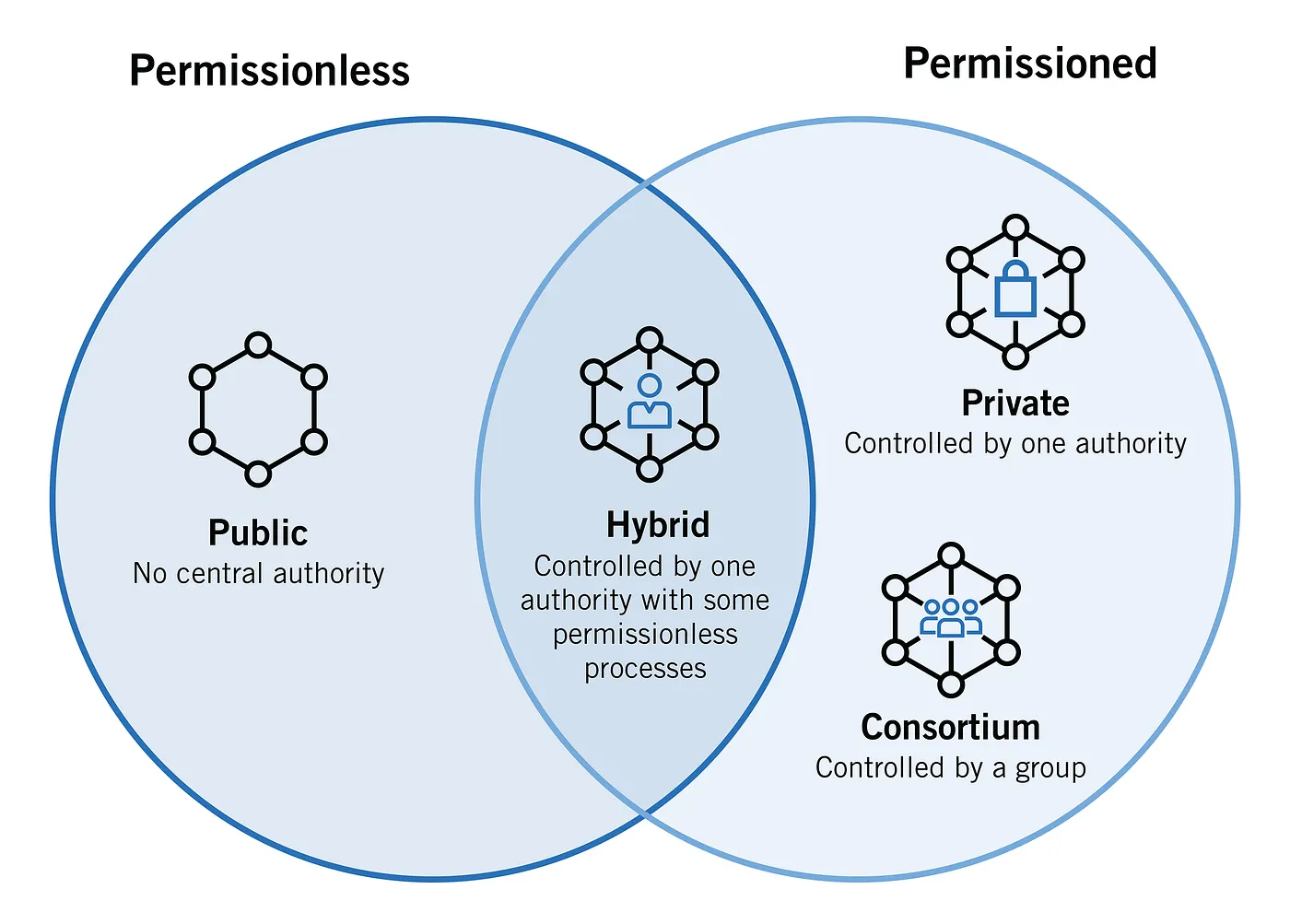
Leaving the tokenisation of bonds and deposits aside, another point of interest is that this liquidity pool will be “on a public blockchain-based network” which is an interesting choice because of a few reasons:
Publicly viewable transactions
All transactions made against the liquidity pool smart contract will be viewable by anyone on the public network. This is particularly curious as combined with the fact that the liquidity pool is permissioned, this means that only certified FIs will be able to interact directly with the contract but their transactions are completely visible. Of note, these transactions also include the adding/removing of liquidity by LPs.
It remains to be seen whether the transaction details will be hidden behind some form of cryptography such that the network only knows a transaction happened but is unaware of what has been transacted. Critically, as long as the liquidity pool balances are viewable, it will be relatively easy for the transaction details to be inferred.
Gas fees for every transaction
Transacting on a public blockchain necessarily incurs a gas fee which although relatively menial compared to the transaction volume of FIs, is an avoidable cost if they had chosen a private blockchain instead. Crucially, this implies that the system will rely on the security guarantees of the underlying cryptocurrency which have yet to be revealed.
Given the gas fees, the expected transaction count is also likely going to be limited with transactions being batched wherever possible.
Requirement to hold underlying cryptocurrency
From an operational perspective, all participants will have to hold the underlying cryptocurrency, even if only for a short while just for the purposes of transacting. This is a very interesting proposition as this will be a first in terms of FIs, specifically banks, holding a cryptocurrency directly as part of their portfolio instead of on behalf of a client. Consequently, every participating FI will require knowledge on cryptocurrency wallets in order to participate including the need for handling their own signatures.
Participation in securing the network
Although this architecture does not necessitate the running of a full node by the participants, it is more than likely that with sufficient volume that major FIs will start operating full nodes if only to query the transactions more reliably. This means participation in network consensus and receiving the corresponding rewards in the crypto denomination.
Tokenised Bonds and Deposits: Liquidity Pool Considerations
The asset type being tokenised is of interest as well as it has to do with fund raising via tokenised fixed-income instruments. The key question that arises is whether the liquidity pool mechanism is targeted at raising funds or secondary trading (i.e. price discovery). As is, liquidity pools are designed for the latter but this is not made explicit in the guidelines and hence can only be assumed for now. While it is possible to tweak liquidity pools for fund raising purposes, the ICO method is much more flexible when it comes to accommodating special arrangements as is usually the case with traditional fund raising. If the goal is to raise trading liquidity, then smart pools such as Liquidity Bootstrapping Pools are a viable but less capital efficient alternative.
Other considerations that will be key to the design include:
- What will be the base token of the liquidity pools? Are the pools expected to be pairs between different TKNs or is each TKN paired with a currency equivalent stablecoin such as XSGD. My assumption is that each pool will always have a stablecoin pair as this provides a more intuitive frame of reference. This also means that volatility within a pool will be minimised as the value is kept in check by the underlying fixed income instrument. Moreover, 3c) aims to be “interoperable with other digital assets” which likely refers to different fiat-backed stablecoins rather than cryptocurrencies (more info about the future of stablecoins here)
- Will there be a transaction fee charged for trades against the liquidity pool and if so, what percentage of transaction value? My assumption is that a relatively high transaction fee will be required given the relative scarcity of such instruments. This will make it worthwhile for LPs to provide their TKN to the pool. Balancing this will be the relative stability of the underlying fixed income instruments.
- Will liquidity provision be fixed at a 50:50 valuation ratio or will the pool allow concentrated liquidity provision such as the one implemented in UniSwap V3. It is hard to see more sophisticated institutional LPs settling for anything less than concentrated liquidity as this allows them to increase their capital efficiency based on the their specified boundaries relative to the current liquidity pool price.
CeDeFi: A Step In The Right Direction?

With the above assumptions, is using a liquidity pool designed specifically for the pseudonymous DeFi space really better than the existing solution? While bond and deposit tokenisation will definitely increase transparency and efficiency, the answer is not so clear cut when it comes to liquidity pools holding such tokens. Having limited exposure to the wholesale funding domain, please do correct any of my misconceptions as some assumptions were made for the purpose of analysis.
Setting aside the operational requirement to self-custodise crypto assets and tokens, the permissioned nature of the liquidity pool necessarily limits the potential pool of participants. Assuming a smaller pool of participants, the secondary market activity for fixed income instruments will depend heavily on a few FIs. Counteracting this will be the tendency for liquidity to attract more liquidity. Without sufficient liquidity, there is bound to be significant slippage if the average transaction is large compared to the available liquidity. Consequently, this also significantly raises the potential impermanent loss for LPs if there are insufficient arbitrageurs. The above can be minimised depending on the price curve that is implemented. Given the nature of the asset, a more stable price curve should be expected as this maximises capital efficiency for a relatively fixed price asset.
Of note, the liquidity pool dynamics are also more suited for the secondary market rather than the initial raising or final redemption of funds. Fund raising in the traditional context is usually done in batches where the potential buyer will agree to purchase a fixed amount of assets at a particular price. These orders are then used to build an order book to determine the principal amount and credit spread for the instrument. Without fixing the token representation and pricing upfront, liquidity pool mechanics will just introduce unneeded complexity when compared to the ICO method.
For redemption of matured fixed income instruments, the most efficient method will be to credit the wallet holding the TKN with the equivalent stablecoin amount while halting all further trades of the TKN. Alternatively, buybacks through the smart contract will also possible. Both the above allows redemptions of each TKN unit to be fixed at a certain amount rather than exposed to the price curve movements on a liquidity pool. Of note, the burden of the gas fees will fall on the issuer in the first case while the latter will be incurred by the holder.
As a trader or LP, there are also effective price considerations which differs from the traditional order book model. In the order book model, users are able to set fixed trade amounts at various price points. In the AMM model, traders are only able to trade against the liquidity pool’s current price while a LPs assets are always being traded gradually along the curve if the current price is within the range set. For a trader, it is possible to sidestep this by building an additional order book layer on top where orders will only be sent if the liquidity pool’s price hits a target price. However, a LP must be content with setting a trading boundary within which they have no direct control as to the amount and price which their assets get sold at. Of note, moving away from the OTC mechanism necessitates a standard price, no specialised quotes.
The biggest value-add which Project Guardian might bring is transparency and accessibility. Currently, majority of bonds are traded over-the-counter and therefore require the services of a broker to trade. Elongated trade times due to the diversity and opacity of the bond market also results in difficulty with arriving at a spot price for the bond. While the bulk of this will be solved via asset tokenisation alone, implementing a liquidity pool might bring additional insights to the industry as there is now more incentive for liquidity to be pooled in a single exchange. As such, any price changes are immediately known publicly while permissioned FIs all compete on the same playing field with regards to access to liquidity. Furthermore, the cost of reconciling prices and quantities will be significantly reduced.
Overall, Project Guardian is a step towards more accountability at the expense of centralisation. Improved accessibility only applies to a predefined set of FIs. From a macro perspective, the transparency afforded through the use of a public blockchain is a big step forward in terms of holding such FIs accountable. While not directly an outcome of Project Guardian,** the biggest impact to DeFi will be via mandatory education and adoption of cryptos by tradFi if the project is implemented**.
As much as the crypto-community preaches financial autonomy, CeDeFi will still be a much needed bridge connecting crypto to the real world. Until the point in time when the majority of users place more value on financial autonomy, FIs will continue to be the gate keepers of crypto adoption and growth. Moreover, given that finance trades on relationships, there is still no viable decentralised alternative to encode such trust. Such an alternative will be crucial if users ever demand for more financial autonomy away from the reach of gatekeepers.