Much like the national flower representing Singapore’s spirit, Project Orchid is the country’s multi-phase approach to creating a vibrant and resilient retail CBDC system. Key to this project is the concept of Purpose Bound Money (PBM) which is programmable money where terms of use can be specified by the PBM creator. This promises to unlock significant value by optimising financial flows through utilising code.
The bigger question left unaddressed is what this means for the future of finance and does it lead to greater financial inclusion?
“Though MAS has assessed that there is no urgent need for a retail CBDC in Singapore at this point in time, MAS seeks to facilitate ongoing learning and advance the financial infrastructure in Singapore” — Monetary Authority of Singapore
In the same spirit as MAS, this article is an exploratory look at the key points outlined in their whitepaper and what it means in the context of Web3 technologies. The article is split into 4 sections with the first 3 being a summary of the Project Orchid concepts. You can skip to the last section if you’re interested in the Web3 Implications.
- Purpose Bound Money: Adding Logic to Fiat
- The PBM Lifecycle: Deeply Intertwined with Digital Currencies
- Piloting Use Cases: Redemptions, Disbursements, & Grants
- Implications: Open-sourced Technical Frameworks, Closed-sourced Rails
For a separate analysis on MAS other projects:
Disclaimer: I am in no way affiliated to the project and views here are completely my own. I have previously worked with the DBS team which is currently piloting one of the case studies but did not work on the project directly. I have since left the tradFi space in order to dedicate myself completely to the crypto & DeFi space. While this naturally means I am more bullish on DeFi, my goal is always to maintain an objective stance and build towards the more inclusive solution. To this end, any feedback or collaborations are welcomed.
Purpose Bound Money: Adding Logic to Fiat
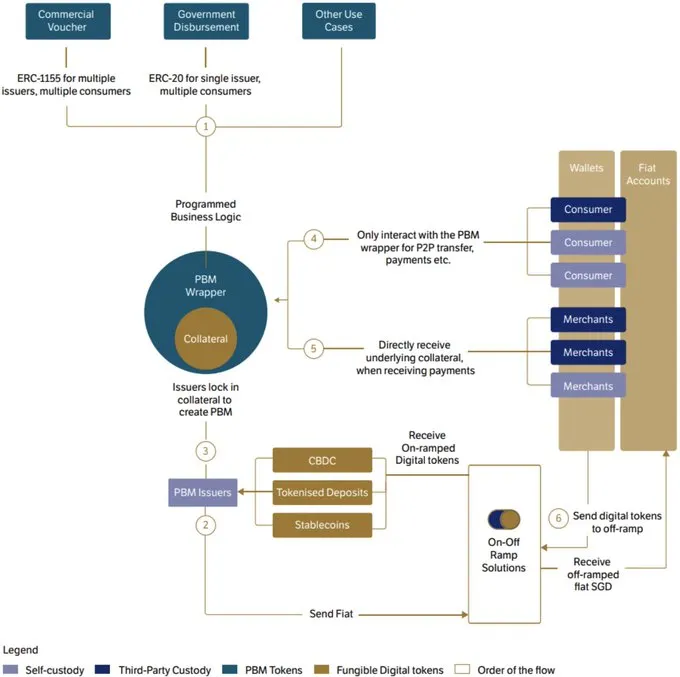
The PBM framework consists of 4 distinct components:
- Digital Currency Backing PBM: A fiat equivalent (CBDCs, tokenised assets, “securely backed” stablecoins) that collateralises the PBM. In other words, the monetary value backing the PBM. Critically, the whitepaper explicitly states that:
”Cryptocurrencies (e.g., bitcoin) and other forms of stablecoins are unlikely to have potential to be circulated as ‘money’”.
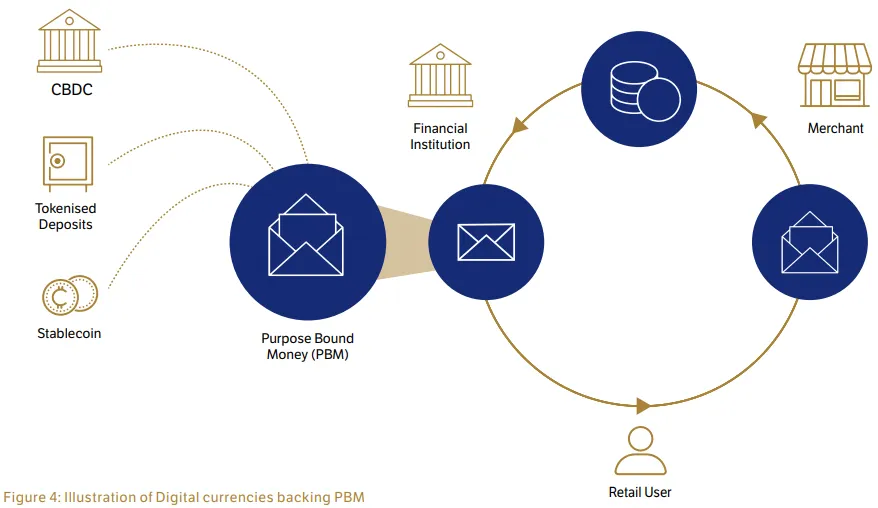
- PBM Wrapper: Smart contract code which “wraps” the digital currency enabling business logic to be programmed onto the currency. No new payment instruments are created and consumers are only able to interact with the PBM and not the underlying currency.
- **PBM Infrastructure: **The PBM smart contract will run on DLT based infrastructure. Selection of the optimal ledger (public, private, etc.) will be a topic for future phases. There is no commitment towards a specific chain although their design process takes heavy inspiration from the EVM.
- **PBM Wallet: **PBM wallets are used by users to send and receive PBMs and the respective backing digital currencies. Self-custodial wallets are being considered but the on/off-ramps will still need to go through KYC/AML by the bank. MAS acknowledges that it is not clear that AML/CFT risks can be fully mitigated in the case of un-hosted wallets.
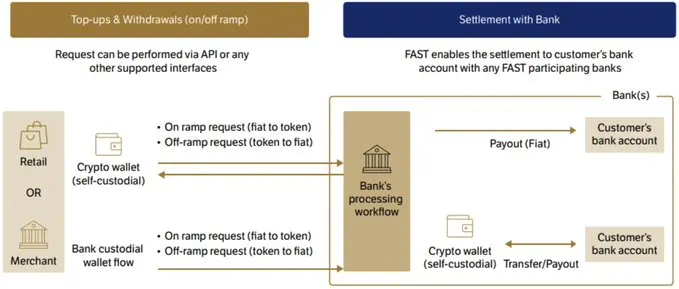
“PBM refers to a protocol that specifies the conditions upon which an underlying digital currency can be used “ — MAS
The PBM Lifecycle: Deeply Intertwined with Digital Currencies
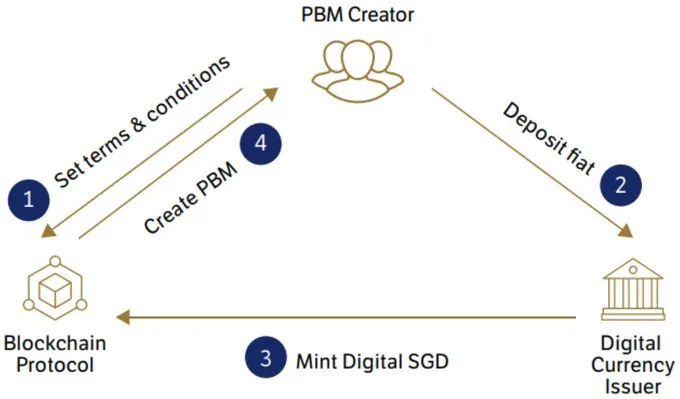
Based on the recommendations from the working group, PBMs are envisioned to have a standard lifecycle irrespective of the underlying technical implementation:
- PBM creator sets T&Cs
- PBM creator deposit fiat equivalent with digital currency issuer
- Digital currency issuer mints currency backing PBM
- Creator creates and distributes PBM
- PBM is transacted (or transferred)
- Merchants receive PBM
- PBM is unwrapped and effectively ‘burned’
- Underlying digital currency credited to merchant
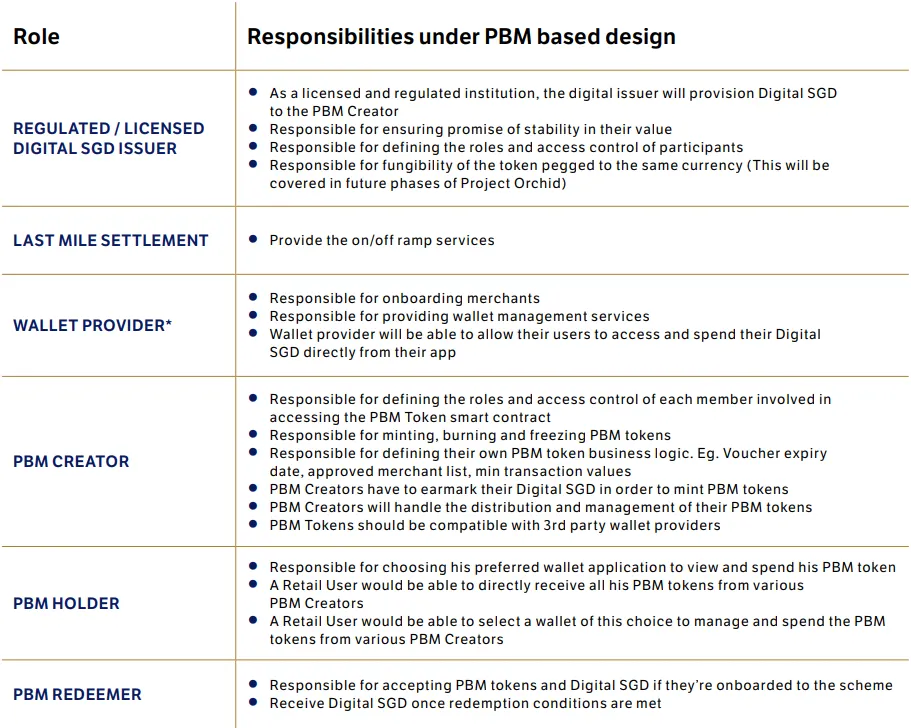
In addition to the above, the PBM can also lapse if one of the conditions set is expired or violated. With this lifecycle, the focus is very much on managing the claims which various stakeholders have through the movement of a digital asset (in this case a digital currency wrapped in a PBM). As such, the whitepaper also defines the possible set of PBM users:
Piloting Use Cases: Redemptions, Disbursements, & Grants
With the PBM framework outlined above, Project Orchid will be piloting 4 case studies largely revolving around the idea of redemptions:
Government voucher redemptions (OGP, DBS)
- Challenges: High cost of implementing voucher scheme (costs, educations, contracts); speed of settlement
- Approach: OGP (the PBM creator) prefunds its account with DBS (the digital currency issuer) which enables it to create PBMs. PBMs are distributed to retail consumers to be spent at selected Merchants which have been onboarded to both OGP and DBS. The PBM is unwrapped for digital SGD in the Merchants digital currency account and converted at the end of day to their fiat account.
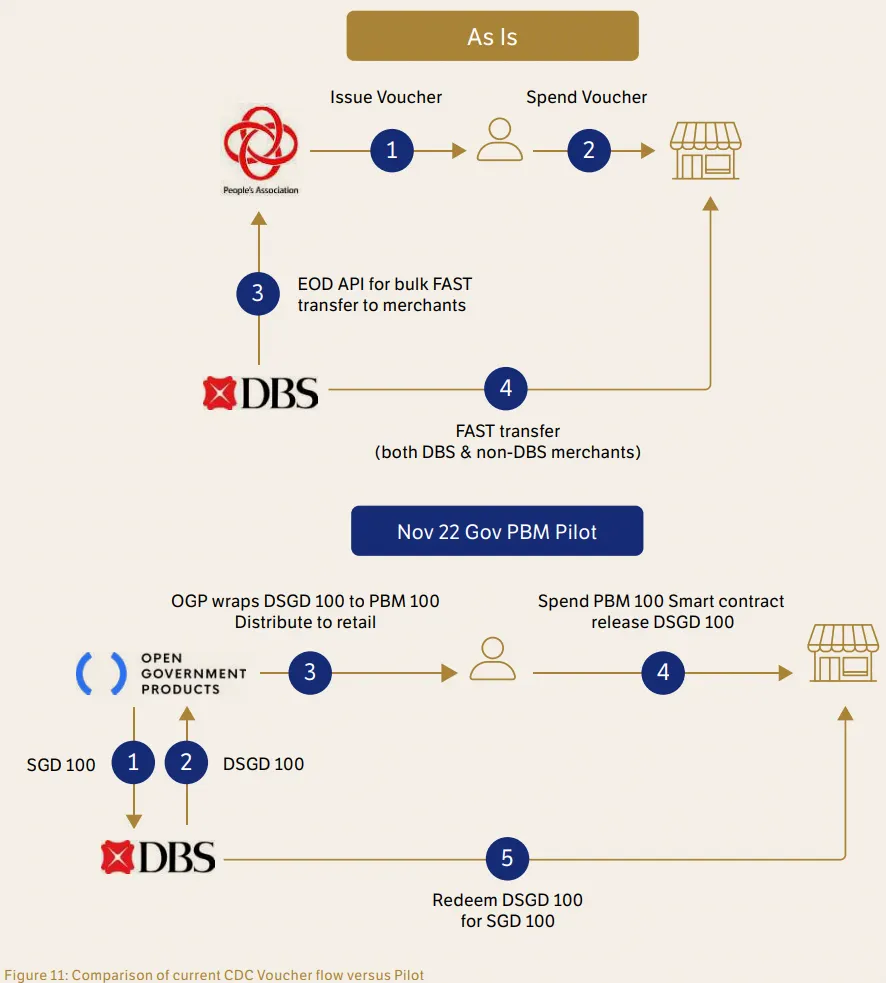
- Benefits: Ease of onboarding merchants; Faster payouts; Interoperability across voucher schemes
Commercial voucher redemptions (Temasek, Fazz, Grab)
- Challenges: Fragmented customer experience; Multiple ecosystems each with their own rules
- Approach: XSGD is minted as PBM collateral. Airdrop PBM food vouchers (on Polygon) to Singapore Fintech Festival attendees. PBM vouchers can be spent at selected food Merchants. Merchant unwraps PBM and is credited with the fiat equivalent in their Grab wallet.
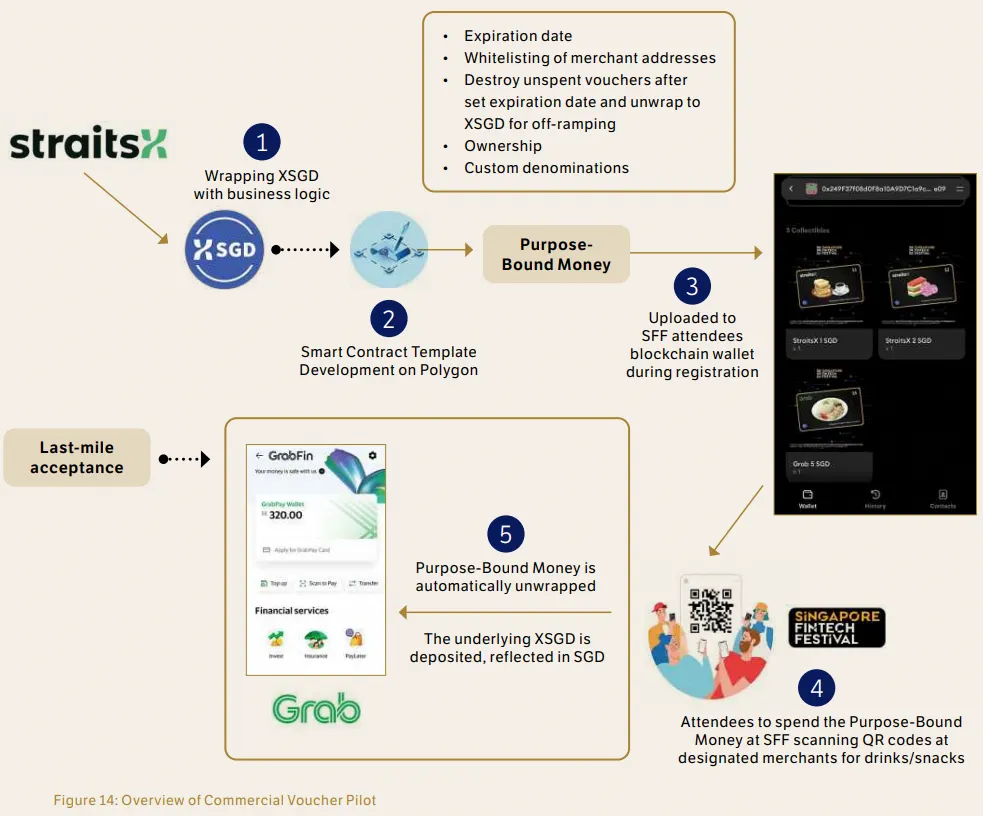
- Benefits: PMB set to expire if unused with funds being returned to PBM creator; Pausing of transactions; Increased transparency and provenance
Government fund disbursements without a bank account (OCBC, CPF)
- Challenges: Some users are unable to use direct bank crediting
- Approach: Disbursement of PBM to a small select group of CPFB recipients who are OCBC customers (OCBC Enterprise Blockchain Platform EVM). PBM recipients will be able to select the mode of redemption. Settlement will be based on traditional fiat payment rails.
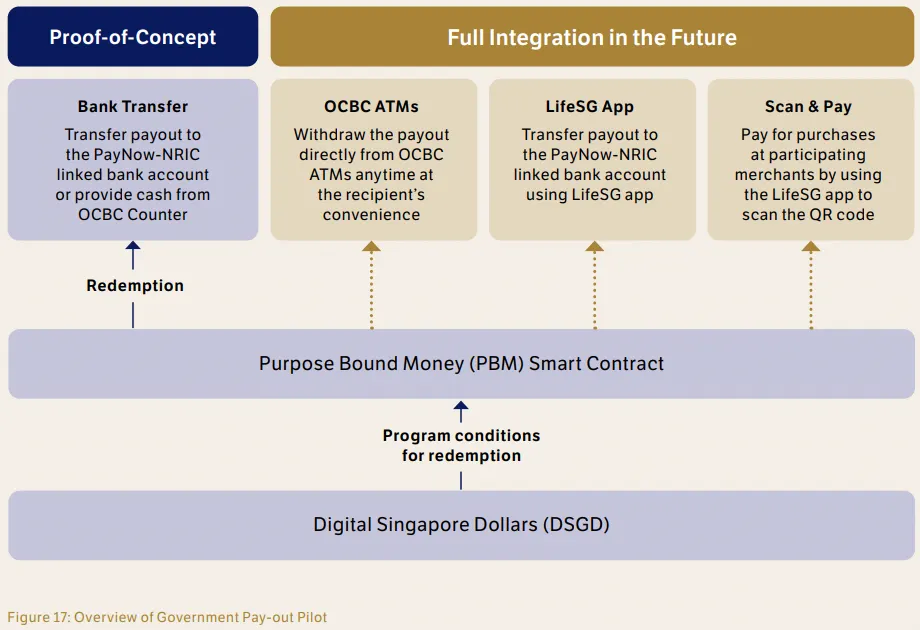
- Benefits: Additional channels to claim disbursements; Reduce fund disbursement overheads
Claiming of government education grant schemes (UOB, OGP, SkillsFuture)
- Challenges: Administrative costs; long settlement times; fraudulent claims
- Approach: Approved Training Institutions (ATI) will be onboarded by UOB (the currency issuer). SkillsFuture (PBM creator) will prefund their UOB account which enables the DSGD to be minted by UOB. ERC20 PBM is distributed by SkillsFuture where it is redeemed at ATIs. ATIs will validate completion of education against a smart contract upon which PBM is unwrapped for DGSD credited to the ATIs account.
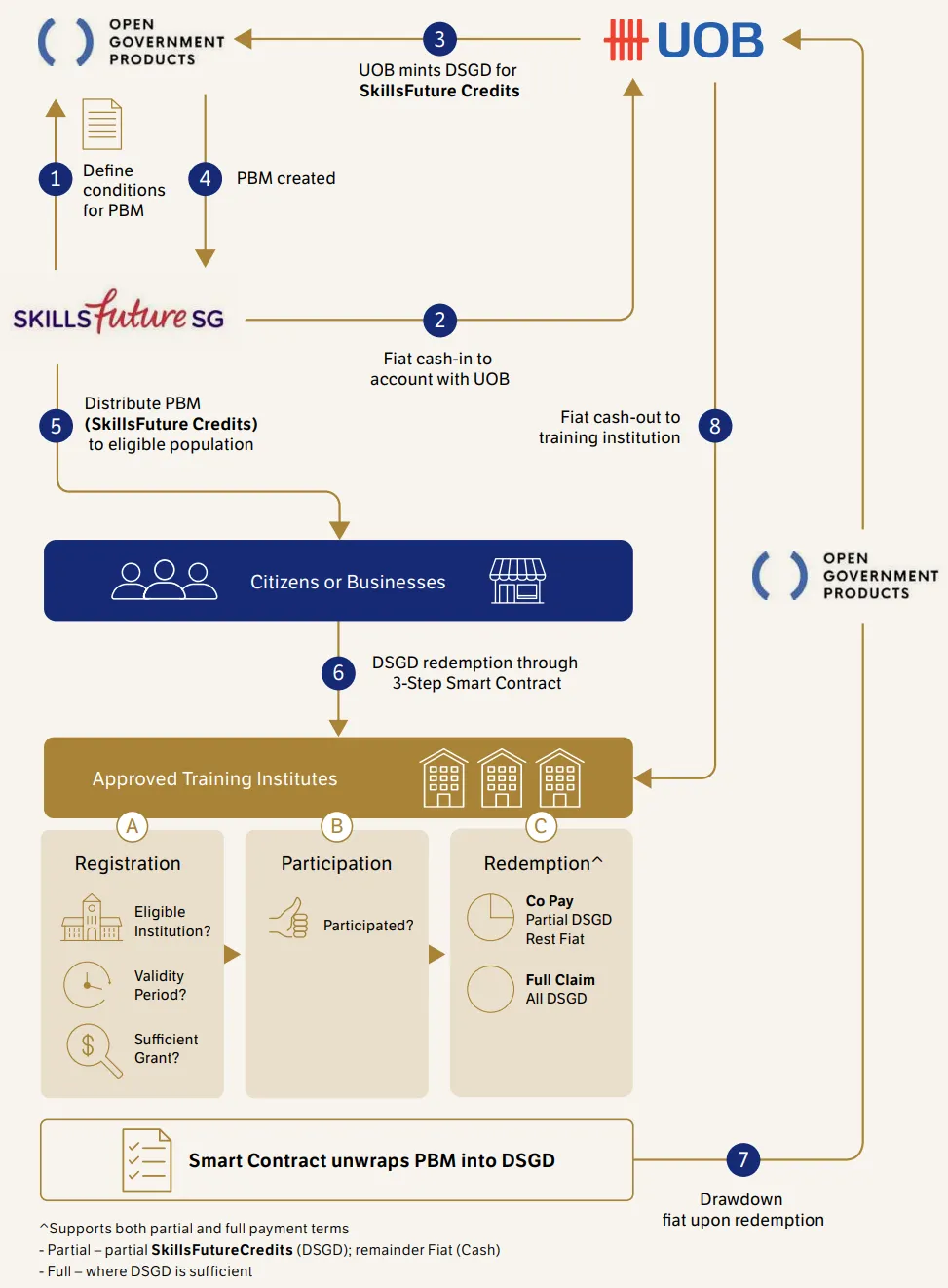
- Benefits: Faster settlement times; increased transparency of claims on both trainee and trainer; smart contract enforced redemption rules
Implications: Open-sourced Technical Frameworks, Closed-sourced Rails
Unsurprisingly, given MAS mandate, Project Orchid is a step towards optimising existing processes rather than redefining traditional finance power structures. Within the tradFi ecosystem, Project Orchid has promising potential of achieving better interoperability, efficiency, and accountability via smart contract code. While MAS has committed to open-source the PBM framework, financial payments and settlements are still purely within the tradFi domain.
PBMs are unable to be minted without first being backed by a digital currency. Digital currency issuers will have to be a “licensed and regulated institution” that is responsible for ensuring the stability of their issued digital currency which will be collateralised with fiat equivalents. On the other hand, consumers are only able to interact directly with the PBM while the underlying digital currency is handled by their respective banks.
As such, DeFi is not directly affected by the current phase of Project Orchid as cryptos have been excluded from the start. MAS has also explicitly stated that cryptos “are unlikely to have the potential to be circulated as ‘money’”. While the digital currency will always remain on private blockchains run by financial institutions, there is a possibility that PBM could be exchanged via DeFi protocols if it is implemented as a ERC-1155 on a public chain. Note that PBMs can circumvent DeFi usage by whitelisting only approved contract addresses in the wrapper. A public and permissionless blockchain approach seems unlikely if this project follows in the footsteps of MAS separate attempt at asset tokenisation: Project Guardian.
Given that tradFi is built on the foundation of credential based access which is supported by the ability of the legal system to enforce trust, KYC/AML requirements will apply throughout the PBM chain:
- Digital currency issuers, wallet providers, last-mile settlement providers will need to be a regulated financial institution.
- PBM creator and redeemers will need an account with the digital currency issuer.
- Wallet providers/Virtual Asset Service Providers will have to conduct customer due diligence in order to onboard Merchants and Consumers.
Nonetheless, it is exciting to see that self-custodial wallets are actually being tabled as this is a major step towards consumer autonomy. MAS is very much aware of the risks that accompanies non-custodial wallets from key recovery to peer-to-peer transactions. Apart from the standard on/off-ramps and transaction limit used to flag potentially fraudulent transactions, it is encouraging to see that newer approaches such as Verifiable Credentials are also being considered. Verifiable Credentials, if implemented per the specs, will signal a fundamental shift in digital identity ownership.
Critically, implicit in the above design is the concern for transactional privacy. This is a critical characteristic of money which needs to be maintained as fiat money moves from the physical to the digital. The current iteration of Project Orchid has yet to tackle the issue of privacy but rather opted to cover such considerations in future phases.
Given the social contract which the Singapore government currently has with their citizens, MAS has rightfully stated that there is no urgent need for retail CBDCs in Singapore. However, they are acutely aware of the macro factors that will inevitably lead to SGD losing value without a CBDC equivalent. Quote from the whitepaper:
“The case for a retail CBDC in Singapore could strengthen over time, especially if innovative uses emerge or there are signs that digital currencies not denominated in SGD are gaining traction as a medium of exchange locally.”
The creation of CBDCs are inherently political as it defines the value flows which are possible within a local economy. In this aspect, MAS is taking a measured approach to build up Singapore’s technical capabilities in the event that it does decide to implement a CBDC. Crucially, based on the pilots, Project Orchid will likely result in further transparency and accountability for existing processes. Only the next phase of Project Orchid will determine whether this will come at the expense of the consumer rights. Until then, the tug-of-war between financial autonomy and consumer protection endures.